An east-coast low does not ask permission at the Heads. The Bureau names it, the harbour bar turns the colour of tea, and for a night the streets behind Nobbys and through the low parts of Newcastle, Hamilton South and the lake’s edge become a drainage system that was designed on a quieter piece of paper. Concrete is asked to be a boat. It is not a boat. It is a lid on a base, and the base is only as honest as the last person who compacted it.
This is a weather essay that belongs with coastal durability because the low is the Hunter’s particular storm: not a tropical cyclone, not a polite winter front, but a compact engine that parks off the coast and wrings itself out on the same catchments for hours. The mix in the driveway did not suddenly forget how to be concrete. The water found the pit you meant to clean in November.
Overland flow is a design load
Water that cannot get into a pipe will travel over the ground. That sentence is hydrology, and it is also why a garage in a dip can take a hundred millimetres of dirty water while the house two lots up the street stays dry. Overland flow picks up mulch, sand, a wheelie bin, and the silt from a neighbour’s unsealed works. It then treats your driveway as a flume. If the slab was poured with a fall toward the house — a common old habit on blocks that drop from the street — the water arrives at the door with an argument.
New work should assume that the pit will block. The planning essay for a Newcastle driveway is blunt about fall, and the sloping-block essay is the one to read before anyone orders the mix on a hillside. After a low, the inspection is the reverse of that briefing: where did the water actually go, and what did it take with it?
Harbour suburbs add a second water. Storm surge and a high tide can push the ocean and the river into places that a rainfall map does not mention. Stockton, the lower streets near the basin, and the industrial edges have learned this more than once. A slab that sat in brackish water for an afternoon has had a chloride bath as well as a scouring. Wash it, as you would after a salt wind, and do not confuse the tide mark with a structural crack.
Pits, lintels and the forgotten grate
A blocked pit converts a drainage plan into a fountain. Leaves from the fig, grit from the last grind, a tennis ball: the list is domestic and the consequence is not. Water that cannot enter the grate will run along the lip of the slab, dive into the first open joint, and start work on the base. The concrete looks fine from the kitchen window. The shoulder is being unbuilt.
After a low, lift every grate you own. If the pit is full of sand, that sand came from a scoured garden, an unsealed verge, or a broken kerb inlet up the street. Council infrastructure and private pits share the same water. Your job is to stop your block adding silt and to stop your slab sitting in it. Lintels over drains and the thin sections around a grate take the debris hit. A cracked lintel is a component that did its job, not a house failure.
Underscour: the damage you do not see from the lounge
Underscour is water removing the sand, gravel or residual clay from under the edge of a slab. The concrete then spans a little further than it was meant to, or it drops. You notice a hollow sound, a lip at a joint, a fence post that is suddenly proud of the path, or a wheel that finds a new dip at the garage door. On a house slab the same process at a corner is a soils problem and a structural one. On a driveway it is how a twenty-year slab becomes a trip in a single night.
Saturated bases do a quieter version of the same work. Clay that was a competent support at optimum moisture becomes a grease when it is held wet for two days. Sand can pump. Fill can collapse into the void it always contained. When the water leaves, the slab may not sit down in the same shape it stood up in. This is why you inspect twice: once in the wet, to see the flow paths, and once in the dry, to see the settlement.
Do not “pack sand under it” from the edge with a trowel. You have built a future void. Restoring a base is excavation, compaction in layers, then a decision about grout, stitch, edge or cut-out. That decision sits with a licensed person if the member is a house. The repairs hub is the next desk.
What to walk after a low
Wait until the electricity is not in the water and the fence is not about to go. Then walk with a notebook, not with a quote in mind.
Start at the street. Has the crossover moved? Has the council pit vomited silt onto your apron? Crossovers are shared objects; the width and crossover essay exists because this strip has two owners in spirit. Photograph the verge.
Walk the driveway and paths. A joint that was flush and is now a step is more important than a hairline that has always been there. Look at the edges for daylight. Tap. Hollow is a word you should trust. Walk the house perimeter: downpipes, weep holes, the garage, which is often the lowest concrete and the first to pond. If you have a waffle or raft, look for whether the edge has lost support. Look up. Awnings and old coastal soffits take wind-driven rain; water that then rusts the steel is the spalling problem, delayed by a season. Mark the high-water line with tape. You will not remember the height in a month.
Insurance is not maintenance
A named east-coast low, a sudden washout, a tree through a carport slab: those are the sentences insurance is built to hear. A driveway that has been mapping for eight years and opened another millimetre in the wet is maintenance. A pit you have never lifted is maintenance. A fall toward the house that every tradesperson has mentioned is a design problem you already owned.
Separate the event from the condition. Photograph dated cracks now, before the next low. Keep the weather warning. Do not describe a pre-existing hairline as “storm damage” and then be surprised when an assessor is unmoved. Do not, either, let an insurer wave away a slab that dropped because a culvert failed.
Replacing a grate is a maintenance invoice. Reconstructing a scoured base is a project. Resurfacing a driveway whose shoulder has been eaten out is usually the wrong project. You cannot overlay a void. Premiums and the wording of “storm” versus “flood” change, and this journal will not quote your policy. The editorial standards apply: we are not your lawyer.
Harbour weather, kept specific
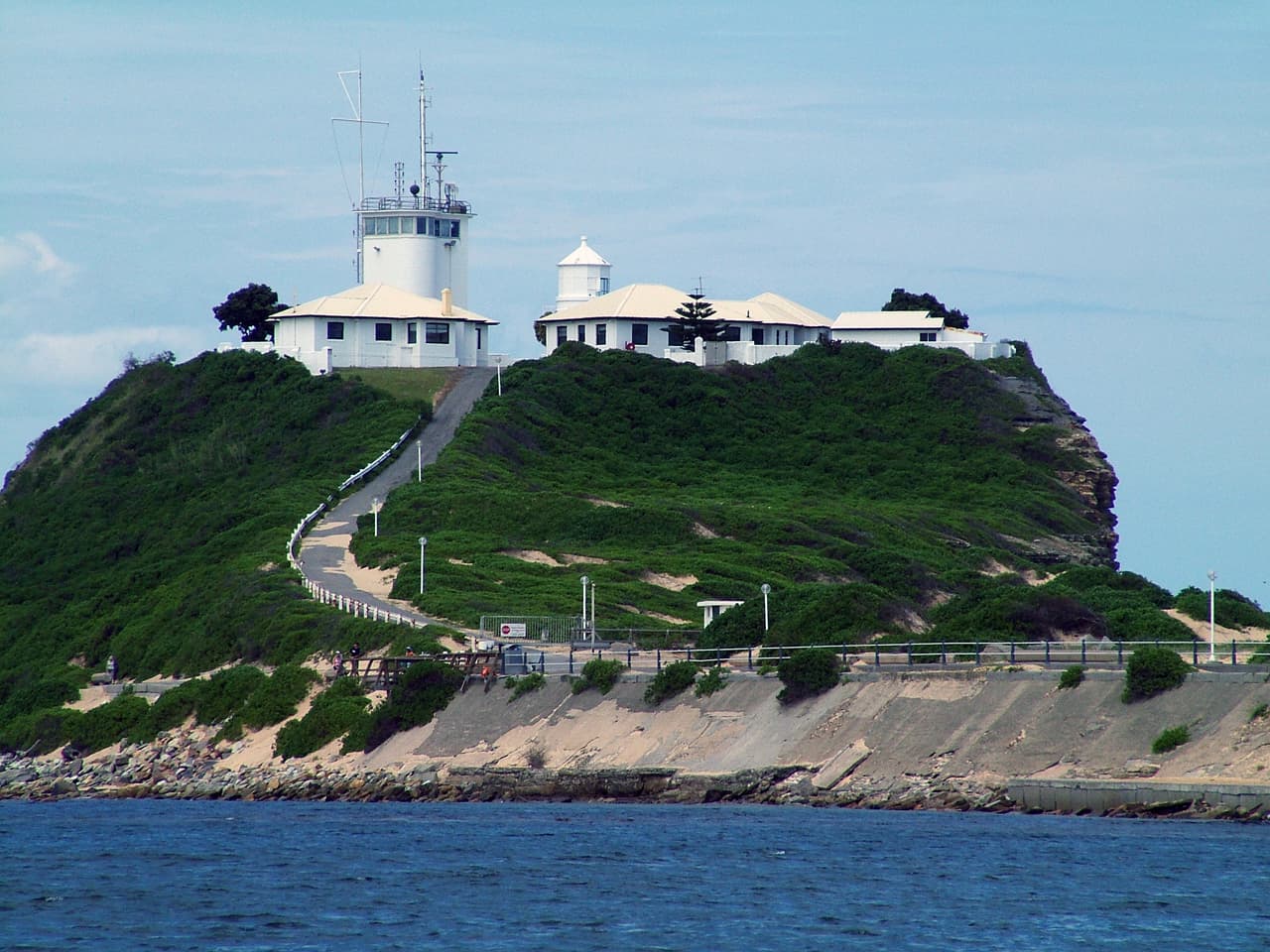
Nobbys is a useful hill because you can see the engine. When the low sits off the coast the swell arrives from the south-east, the rain arrives in bands, and the wind writes salt onto the same concrete it is trying to undermine. A Sydney thunderstorm can be violent and brief. A Hunter low can be a two-day soak with a storm-surge footnote. Saturated ground plus overland flow plus chloride is why we do not file this under “just drainage”.
Resist the first pressure washer for a week. Let the base declare itself. Wash salt and silt with a hose. Then decide, in the daylight, whether you are looking at a clean-up, a drain, a repair or an engineer. The Pacific will send another low. The useful house is the one whose pits were empty, whose fall still worked, and whose owner walked the concrete twice and wrote down what the water actually did.