A driveway in this city has a border that most quotes pretend is a suggestion. Inside the gate, the slab is yours to argue about with a concreter. Across the verge it becomes a piece of public road. The concrete does not change. The owner does.
This is not legal advice and it is not a substitute for the pages Newcastle City Council, Lake Macquarie City Council and Port Stephens Council publish for themselves. Those pages move. Fees move. The name of the form moves. What follows is a plain-English map of the kind of process you will meet, written for the planning and costs desk, so you know which questions to take to the current website rather than to a rumour on a job site.
The crossing is the job council cares about
Councils talk about vehicular crossings, driveways, laybacks and footpath crossings. Residents talk about “the bit from the street to the gate”. Both mean the same strip: the kerb is dropped or formed, the verge is paved, the footpath is carried through or reinstated, and a car is invited to enter private land without destroying the public edge.
In New South Wales, work in a public road is not a neighbourly improvisation. The Roads Act is the statute people mean when they say “section 138”. In ordinary language, it is permission from the roads authority — usually the council, sometimes Transport for NSW on a classified road — to do something to the road reserve. Pouring a crossing, cutting a kerb, occupying the footpath with a pump, or rebuilding a layback after a demolition all live in that weather.
A development application is a different conversation. Some driveways are ancillary to a house and never see a DA. Some are part of a dual occupancy, a new dwelling, a commercial crossover or a site with a heritage listing, and then the crossing is only one clause in a thicker file. Do not let anyone collapse the two into a shrug.
If you are still designing the private slab, read driveways and crossovers alongside this essay. Width, thickness and fall are not only taste. They are often the numbers council has already written down.
What the process feels like in Newcastle
Newcastle City Council is the desk for the harbour city: the old terraces, the coastal suburbs, the inner west, the new release areas at the edge. The flavour of the process, in the years we have been watching it, is an application for a vehicular crossing or driveway works in the road reserve, sometimes bundled with a section 138, sometimes sitting next to a construction certificate that already assumed the crossing.
You will be asked for a plan. The plan should show the width at the kerb and at the boundary, the distance from trees and poles, the footpath, the layback, and how water is supposed to leave. A sketch on the back of a quote is not a plan. A dimensioned drawing that a stranger could build from is a plan.
You may be asked about levels. A crossing that dumps street water into a garage is not a private tragedy. It is a public one that council has seen before. If the block falls toward the house, stop here and read about sloping driveways before anyone books the plant.
You may be asked about the footpath. In much of inner Newcastle the path is not optional scenery. It is a public walking surface that has to continue, in some form, across your new concrete. A crew that pours a pretty apron and leaves a lip for a pram has not finished the job. Reinstatement bonds and inspections exist because enough people have tried to finish it that way.
Heritage overlays change the temperature. Newcastle East, The Hill, Cooks Hill, parts of Hamilton and other conservation areas are not the place to invent a six-metre exposed-aggregate fan because a brochure suggested it. Materials, width and the relationship to a sandstone kerb or a terrace fence can all be live issues. Check the current heritage map and the current development control plan. Then ask council, not the person who wants to pour on Friday.
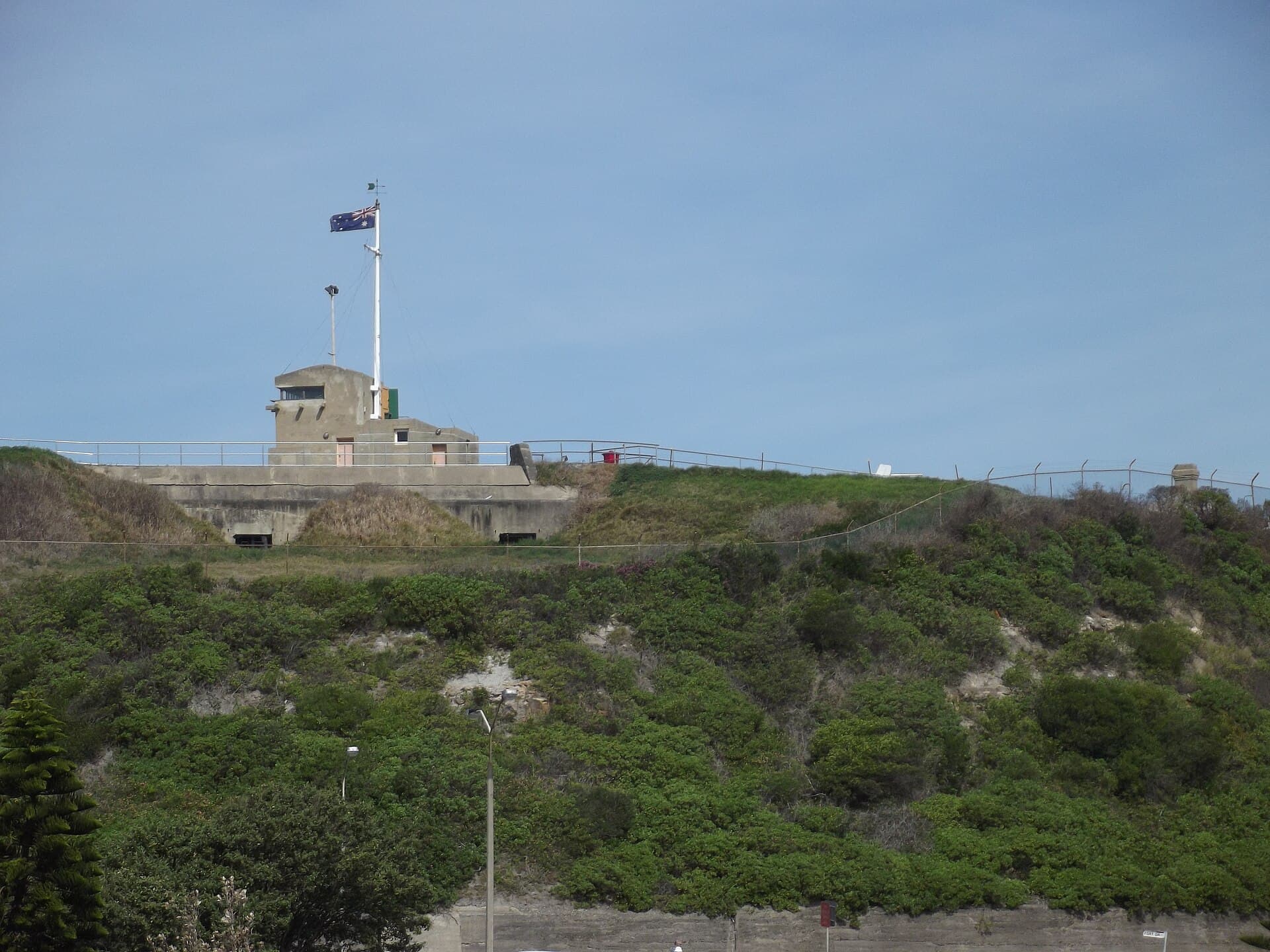
None of this means every house in a conservation area is forbidden a driveway. It means the driveway is a civic object as well as a parking pad. Fort Scratchley did not get its concrete by accident, and neither will your verge.
Lake Macquarie is another desk
The lake is not a suburb of Newcastle. It is another local government area, with another set of forms, another schedule of fees, and another opinion about what a crossing should look like. Warners Bay, Belmont, Toronto, Speers Point and the settlements around the water sit in Lake Macquarie City Council’s world even when the concreter’s yard is in Newcastle and the mix comes from the same plant.
Lakeside ground adds its own questions. Water tables, acid sulfate soils in some low places, and stormwater that has nowhere obvious to go all make a crossing more than a width on a form. If the site is close to the water, pair this process with lakeside concrete work and coastal durability. Council will not pour the slab for you. They will notice if you have ignored the drain.
Do not photocopy a Newcastle approval and change the letterhead. The inspectors are not interchangeable, and the documents are not either.
Port Stephens is a third desk
Port Stephens Council covers a different mix again: coastal towns, rural roads, the industrial and residential weather around Raymond Terrace and Medowie, and streets that can feel almost suburban until you meet a tourist weekend in Nelson Bay. The crossing process still lives in the same legal family — work in a road reserve needs the roads authority — but the forms, the standard drawings and the time it takes will not match Newcastle’s by default.
Rural and semi-rural blocks produce a particular mistake: treating a long gravel entrance as private and then pouring a concrete apron onto a public road without asking. The fact that the road is quieter than Hunter Street does not make the reserve yours. If the road is a state road, the conversation may not even start at the council counter.
What homeowners actually get wrong
They pour the private driveway first and treat the crossing as a later matching exercise. The later matching exercise is how you get a step at the boundary and a letter.
They assume a builder’s construction certificate has already blessed the verge. Sometimes it has. Sometimes the certificate assumed a crossing that was never applied for. Ask to see the document, not the vibe.
They let the concreter “sort council” without anyone’s name on an application. A good crew will know the process. They should not be the only person who knows it exists. If the application is in your name, the approval and the conditions will find you when something is wrong.
They ignore trees. Street trees in this city are not decorations a pump is allowed to wound. Setbacks from trunks, protection of root zones, and the occasional need for an arborist note are ordinary, not precious.
They ignore services. A crossing is a shallow structure over a nest of other people’s assets. Before You Dig Australia is not optional courtesy. It is how you avoid turning a driveway into a repair of a water main.
They treat heritage as a rumour. It is a map. Look at the map.
How this sits with the rest of the job
Council approval does not choose your concreter and it does not price the pour. It sets the public edge of a private job. The cost guide will not give you a council fee, because fees are published by councils and change. Budget for the application, for any bond, for inspections, and for the possibility that the approved width is not the width on the mood board.
Site preparation should wait until the public dimensions are known. Boxing a crossing to a guess, then cutting it to an approval, is how you pay for the same concrete twice. Season matters here too: a wet week can close a verge as effectively as a missing form.
If you are standing on a block and cannot tell where private land ends, start with the deposited plan and the kerb, not with the quote. The quote is allowed to be optimistic. The road reserve is not.
Check the current pages. Ring the desk if the pages are ambiguous. We would rather you spend twenty minutes on a council website than pour a beautiful apron that has to come out. The harbour city is particular about its edges. It has been practising on them since the first coal went out past Nobbys.