Concrete is strong when you squeeze it and modest when you pull it. That is the whole sermon. Steel, or something that behaves like a network of small reinforcements, is how a slab survives the pulling: a wheel in the wrong place, a dry summer after a wet winter, a clay site doing what clay sites do. The rest is brand names and optimism.
This is a homeowner’s essay, not a substitute for AS 3600 or an engineer’s schedule. It sits in planning and costs because the steel is one of the first places a quote goes quiet, and because the morning of the pour is the last morning you can still see whether anyone meant the specification. If you want the soil argument, go to slabs. If you want rust that has already started, go to spalling.
SL mesh is a sheet with a name
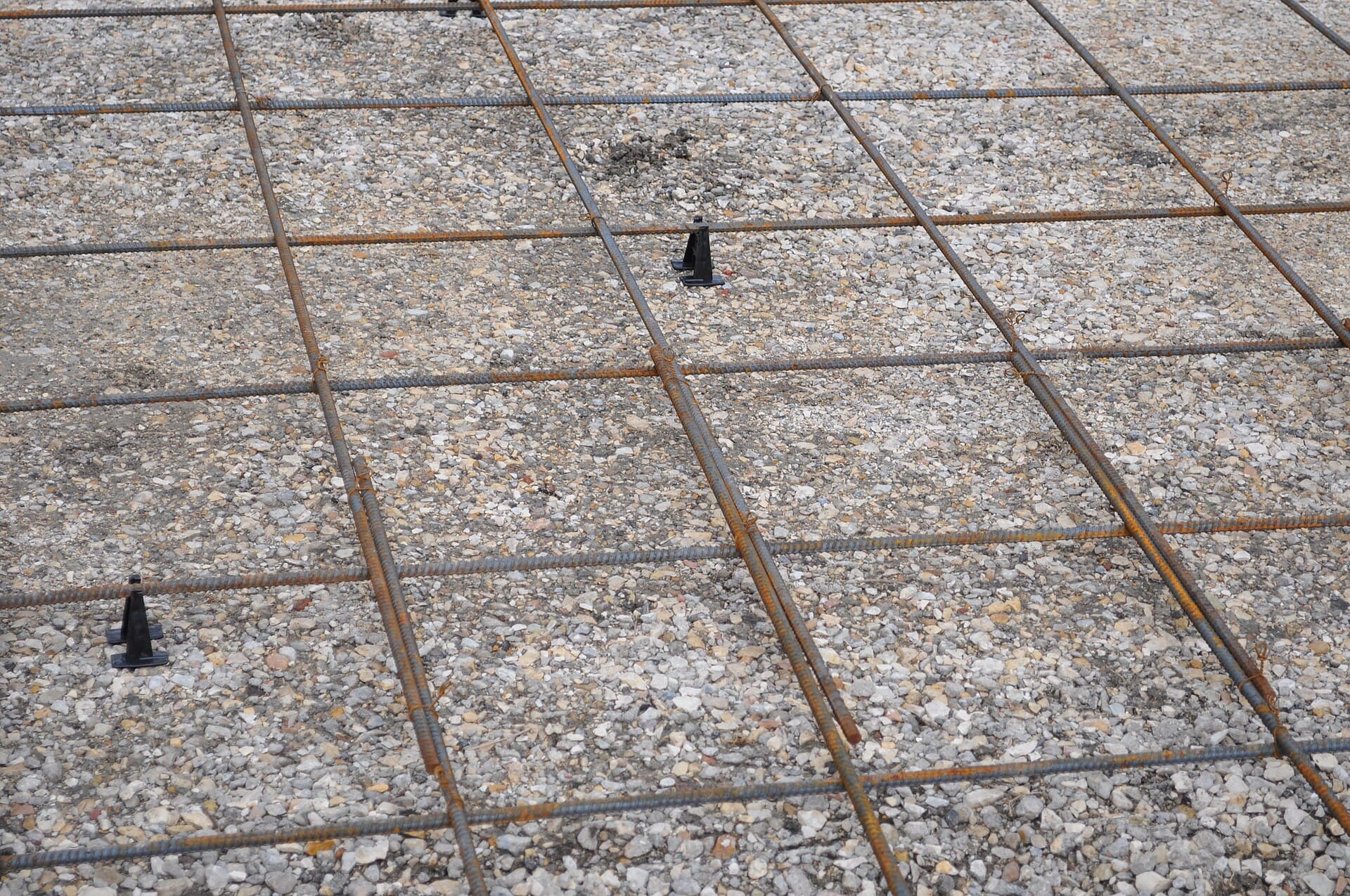
The sheets you see on a driveway in this city are usually SL mesh: a factory-welded grid of wires at a stated spacing and diameter. SL72, SL82 and SL92 are the names that come up in yards. The numbers are not a vibe. They describe the wire and the pitch. A heavier sheet is not automatically the honest one — a driveway and a house raft are different jobs — but a quote that says only “mesh” has not yet said anything.
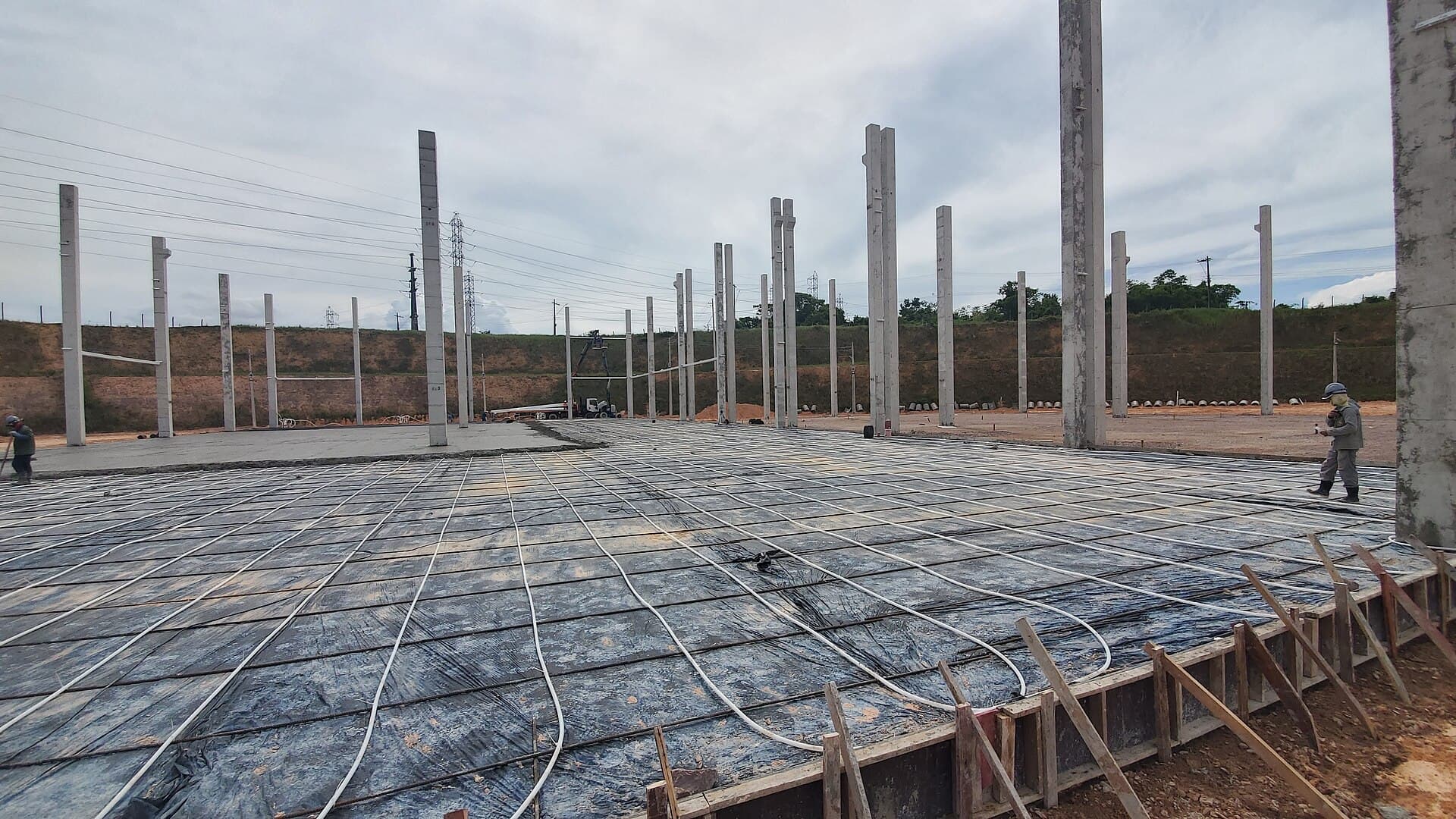
On a typical domestic driveway, a single layer of an appropriate SL sheet, lapped, tied, and sitting on chairs so it ends up in the top half of a hundred-millimetre slab, is ordinary practice in the conversations we trust. “Top half” surprises people who think steel belongs at the bottom, where the crack would open if the ground let go. In a slab on ground the dangerous bending is often from the top when the ground is uneven or the load is a tyre. The engineer’s drawing, if there is one, wins. In the absence of a drawing, a crew that drops the sheet on the gravel and pours over it is placing the steel where it does the least work and rusts the earliest.
Laps matter. Sheets have to overlap by a declared amount so the grid is a grid, not a set of rugs. They have to be tied so a boot does not skate them apart. Edge bars, extra steel at re-entrant corners — the L of a driveway around a garden bed — and bars across a crossing that will take a turning load are the sorts of details a careful crew adds without making a speech. A homeowner can ask. The answer should not be a shrug.
Bar is for the places a sheet is not enough
Bar is the individual length: N12, N16, the numbers that mean a deformed bar of a stated diameter. You see it in thickenings, in beams, in the edge of a raft, in a retaining wall, in a slab that an engineer has actually drawn. You also see it used casually, as a couple of sticks thrown into a thickening because “we always do that”.
Casual bar is not automatically wrong. An edge thickening on a shed pad often wants more than a sheet folded down into a trench. It is wrong when the bars are sitting in the dirt, or when they are the entire reinforcement strategy for a slab that will take a vehicle. Bar without cover is a rust starter kit. Bar without a schedule on a house slab is a different problem, and not one a magazine essay should invent.
If the job is a house, stop shopping for mesh the way you shop for tiles. Site class, soil, and the drawing govern. House slabs on Newcastle soils is the prior reading. A concreter can fix the steel. They should not be inventing the raft.
Chairs and cover are the whole visible test
Bar chairs — plastic, sometimes concrete, occasionally the wrong thing grabbed from a crate — are what hold the grid at the height the drawing promised. Cover is the centimetres of concrete between the steel and the weather. In a coastal city those centimetres are not a fuss. Salt rides the wind at Stockton and Newcastle East. Moisture sits in clay. A sheet that was poured with its wires almost at the surface will telegraph rust through the driveway in a shorter life than the brochure implied.
What you should see before the truck: chairs at a sensible spacing, not one every now and then as a gesture; mesh that does not sag into puddles; chairs that match the thickness, so a hundred-millimetre slab with thirty or forty millimetres of cover still has steel in the right band; and no one using a lump of sandstone or a broken brick as a chair because the bag ran out.
Walk on the mesh. It should feel like a slightly springy mattress, not like you have stepped into a trench. If your boot pushes the sheet onto the gravel, the chairs are too few or the laps are a hammock. That is fixable at 6am. It is not fixable at 6:20am when the first load is coming down the chute.
Cover at the edges is where coastal jobs get sloppy. A pretty exposed face with steel winking through the arris is a future repair. The box should leave room for concrete outside the last wire. If the sheet is hard against the form, say so before anyone calls the plant.
Fibres are a complement, not a disappearing trick
Fibre-reinforced concrete is a real product. Micro synthetic fibres can reduce early plastic shrinkage cracking. Macro synthetics and steel fibres can change how a slab carries load and how it fails. Industrial floors use them with intention. Some domestic pours use a bag in the mix as a small insurance policy on a hot day.
What fibres are not, in the way they are sometimes sold on a driveway flyer, is a magic delete key for mesh. A quote that replaces a specified sheet with “fibre mix, no steel” is asking you to accept a different structural system, usually without a different drawing. On a lightly loaded garden path, that conversation can be had. On a driveway that will take a loaded ute, a boat, or the weekly waste truck reversing in, you want a reason that sounds like an Australian Standard or an engineer, not like a saving.
Fibres also do not replace joints. They do not replace a base. They do not replace cover, because there is no cover to discuss. They can sit alongside mesh as a way to help the first afternoon of a January pour, which is a materials decision as much as a steel one — see winter versus summer. Ask what is in the mix. Ask what has been deleted to pay for it. If nothing has been deleted, you may simply be buying a better morning.
What a homeowner should see before the truck
The night before, or the morning of, you are allowed to look. You are not being difficult. You are looking at the only part of the reinforcement you will ever see.
The box is still on the pegs. The base is compacted and not a pond — preparation is the week that makes this possible. The mesh is on chairs. Laps are tied. Extra bars, if they were promised, are where they were promised. Chairs have not been kicked over by yesterday’s rain. There is cover at the edges. Nothing organic is trapped under the sheet. Services that must pass through have sleeves. The washout is not where the steel is stacked.
If the job was quoted with SL82 and you are looking at a lighter sheet, ask. If the job was quoted with fibres and mesh and you can see only one of those intentions, ask. If the crew is planning to “pull the mesh up as we pour”, understand what you are being told: they are hoping a rake will do the work of chairs. Sometimes a careful pour can lift a sheet. Hoping is not a method.
Take a photograph. Not for the internet — for the file that sits with the quote. When a crack appears in year three, you will want to know whether the steel was a grid or a rumour.
The Hunter makes the steel earn its keep
Clay moves. Salt air looks for a path to the wire. A driveway that falls the wrong way sits wet. A shed slab that was poured thin, with a light mesh on the dirt, will write the rest of this essay for you in rust. None of that is a reason to over-steel a garden path until it resembles a bunker. It is a reason to treat reinforcement as a specified thing, sitting where it can work, with enough concrete around it to last in this climate.
We will not give you a mesh schedule from a magazine desk. We will tell you that the morning before the mixer arrives is the last honest inspection you will get. Look at the chairs. Look at the laps. Look at the cover. If the steel is already in the mud, the truck can wait. The slab cannot be unpoured, and the grid cannot be lifted once it has been buried in the wrong place.