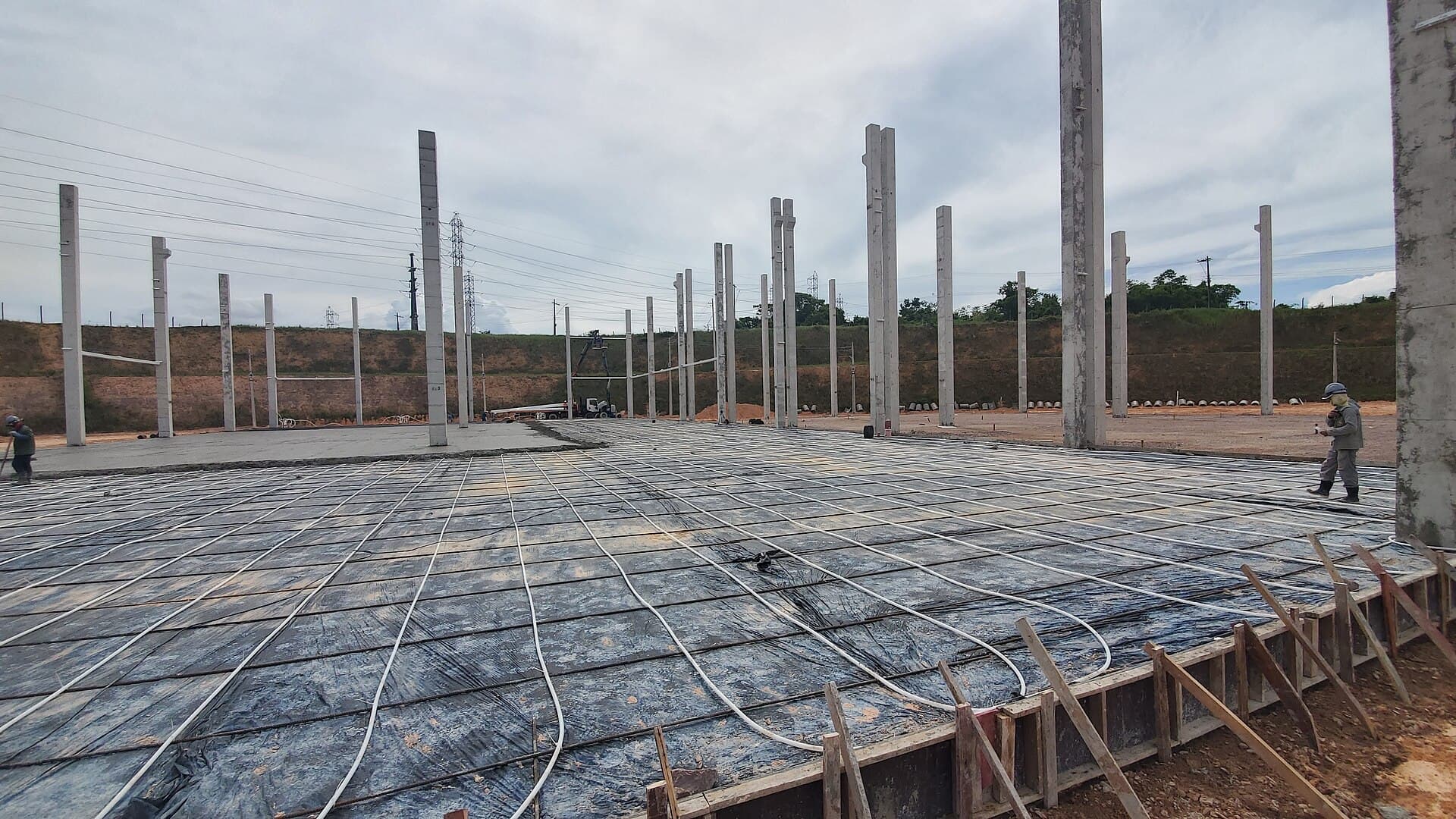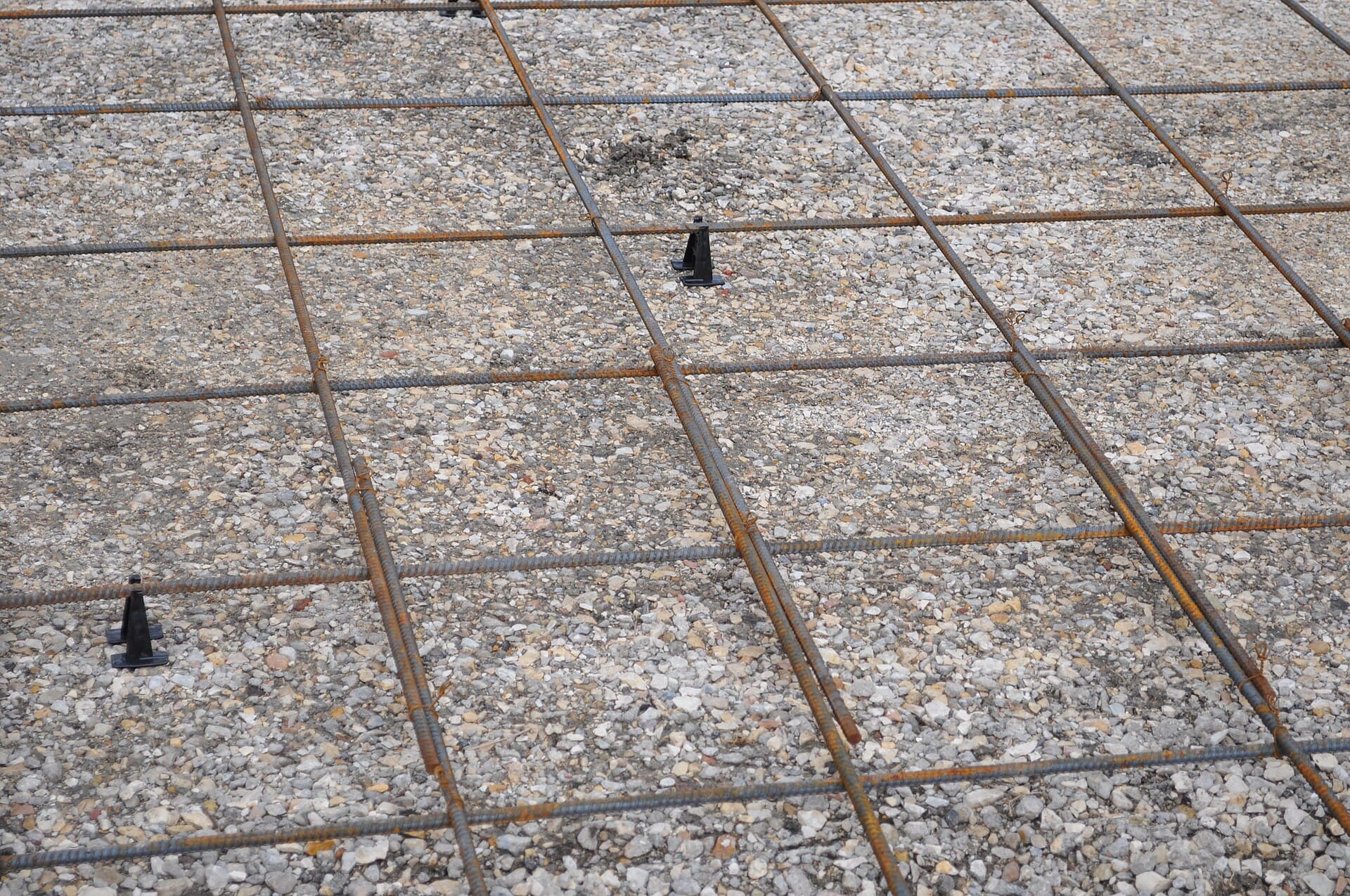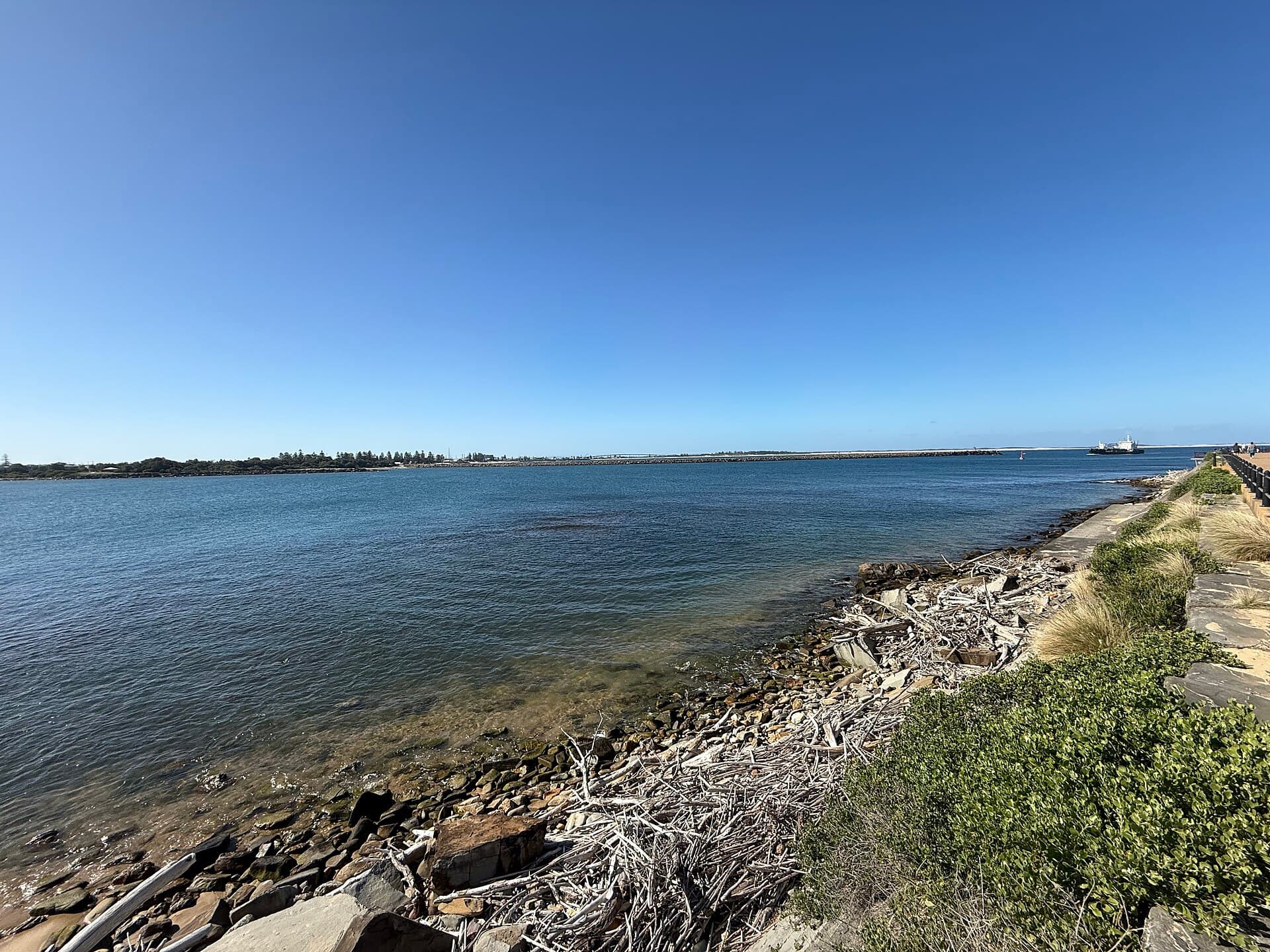
Newcastle does not have a concreting winter in the sense that Canberra does. What it has is a wet, mild, sometimes lazy season in which a slab takes its time, and a long warm season in which the same slab can lose its surface before lunch. Treating those as the same job with different jumpers is how you get a January crack and a July pond.
Season, on this coast, is a materials decision. It changes set times, curing, the diary at the plant, the school-holiday scramble for a crew, and the kind of wind that arrives off the water. It belongs with planning and costs because the calendar is part of the quote, and with coastal durability because the weather here is not scenery. It is an ingredient.
What the Hunter year actually does to concrete
Summer along the Newcastle coast is heat, ultraviolet, and a dryness that can sit inside a humid afternoon. A north-westerly in January will pull water from a fresh surface faster than a homeowner expects. Plastic shrinkage cracks — those early, shallow, parallel lines that look like the slab panicked — are a heat-and-wind product more often than a steel product. The mix was fine. The sky was greedy.
Winter is milder than the national story about pouring. Overnight minima on the coast commonly sit in a range that would not frighten a bag of cement. Inland, toward Maitland and the upper valley, mornings can be sharp, and a low-lying pad can hold a frost the beaches will never see. Even then, the ordinary winter problem is not ice. It is rain, a slow set, and a surface that stays tender while everyone wants to walk on it.
Autumn and spring are the seasons people describe as perfect and then overbook. A still, mild day is when concrete looks like the brochure. It is also when every other driveway in the suburb wants to be poured.
If you want the climate as a longer argument — salt, clay, lows, fading — the weather desk is coastal durability. This essay is narrower. It is about the week you choose to ring the plant.
Set times are not a personality
Concrete does not set by the kitchen clock. It sets by temperature, mix, admixtures, wind and the thickness of the pour. In a Hunter summer a driveway can be firm enough to be dangerous to finish too late, and still too green to drive on. In winter the same mix can sit, sulk, and wait for a crew that has already gone to the next job.
That difference changes labour. Summer wants more hands, a faster finish, shade if you can invent it, and a curing plan that starts while the surface still has a sheen. Evaporation retarders, a light fog, plastic, a curing compound, or a combination, are not fussiness. They are how you keep the water the cement has not yet used. Curing in humid coastal NSW is the companion piece; humidity is not the same as kindness if a wind is stripping the face.
Winter wants patience and a later start. Boxing that was wet overnight will stay wet. A crew that insists on an early pour because that is what they do in February is not reading the material. Joints may need to wait. The first night of protection may matter more, not because of frost — though inland it can — but because a cold, wet surface marks if you treat it like a summer slab.
Admixtures exist for both weathers. Accelerators, retarders, and hot-weather mixes are ordinary tools, not magic. They should be named on the docket if they are in the price. A homeowner does not need to specify a chemical. A homeowner should ask what the plant is sending for the day that is actually coming.
Frost is rare; heat is the local climate
People who learned their concrete in Victoria arrive in Stockton with a frost anxiety the Pacific does not share. Coastal Newcastle can have a cold night. It does not commonly have the hard frost that stops a pour or lifts a skin. The danger of importing that anxiety is that you spend your caution on the wrong season.
Spend it on heat. A dark driveway in Merewether in February is a frying pan. Oxide makes it darker. A sealer, later, will live in that ultraviolet. Heat and UV is why the pretty charcoal mix becomes a patchy grey. On pour day the same sun is why the edges go crusty while the middle is still fat.
Wind is the accomplice. An afternoon sea breeze feels civilised on the skin and still steals water from a slab. A westerly feels like weather and should be treated as a reason to change the time, the mix, or the day. If the Bureau is showing a hot wind and the pour is a large exposed face, you are not being difficult by moving. You are doing site preparation with a forecast.
Inland Hunter winter is a milder version of the southern problem. If you are pouring a shed pad outside Cessnock on a clear July morning, ask about overnight temperatures and whether the crew has a plan for a skin that does not want to be finished. Do not let a coastal habit make that decision by default.
School holidays and the politics of the diary
The materials argument would be cleaner if the calendar were empty. It is not. January is when households want the driveway finished while the cars are elsewhere, the kids are at the beach, and the new year still feels like a project. The mid-year holidays produce a smaller version of the same rush. December is a scramble dressed as Christmas.
That scramble is labour and plant. A good crew can only pour so many slabs a week. The ready-mix plants can only batch so many loads before the trucks are all on the Pacific Highway. A booking in the second week of January is not a right. It is a negotiation that should have started in November.
Winter, especially the quiet stretch of late July and early August, is when a homeowner with a flexible diary has leverage. The set is slower. The sky is less theatrical. The quote may not be cheaper — costs are not a seasonal catalogue — but the crew may be able to give the job the day it deserves. Rain is the trade. You buy a kinder temperature and you accept a rain plan that might be used.
If a concreter is pushing you into this week because “the plant is quiet”, ask whether the quiet is weather or a hole in the book. Both can be true. Only one is a reason to pour a wet site. Choosing a concreter includes noticing who is selling urgency.
Booking the plant is part of the season
Ready-mix is a just-in-time material. It begins to lose the argument with the clock the moment water meets cement. In summer that clock is short. In winter it is longer, but a truck stuck behind an accident at Hexham is still a truck with a hardening load.
A competent booking names the window, the slump, the mix, the additives, the access, and the fact that a pump is or is not waiting. It also names a cancel time. Summer cancellations happen because the wind arrived. Winter cancellations happen because the hole is a pond. Both should be decided early enough that the plant is not already spinning your cubic metres.
On tight inner-Newcastle streets the season has a traffic dimension. School drop-off in term time can close a lane as effectively as a parked boat. January, oddly, can be easier on some residential streets and harder at the coast, where holiday parking is a local sport. The pump needs a place to sit. The mixer needs a place to stand. Those places change with the month.
If the job needs council on the verge, do not book the plant for the day after you remember the form. Approvals have their own weather. See council approvals.
How to choose a week without folklore
Look at the job, not the proverb. A small, shaded rear pad behind a terrace can be poured on a warm day that would be unkind to a dark, west-facing driveway. A large warehouse floor at Tomago has its own rules and should not borrow a domestic calendar; that is a different essay, industrial floors. A decorative exposed face wants a stable day more than it wants a cheap one, because washing too late in a hot wind is how you lose the stone.
Ask the crew what they change between a February pour and a July one. If the answer is “nothing”, you have learned something. Ask what they do if the easterly arrives at ten. Ask when they cut joints in each season. Ask how they cure. The answers should sound like people who have stood on a slab in both weathers, not like people who have a single method and a jumper.
Then look at the sky yourself. The Hunter will not give you a continental winter, and it will not forgive you for treating January as a neutral background. Season is in the mix whether you name it or not. Naming it is the cheaper option.