Most cracks in Hunter concrete are not trying to kill anyone. They are the mineral shrinking, the clay breathing, the joint that should have been sawn on the afternoon of the pour. A few cracks are the house telling you that a corner has dropped, a pipe has been leaking since the renovation, or a balcony edge has started to come apart. The useful skill is not stoicism and it is not panic. It is telling those two families apart before you spend money.
This page sits in repairs and resurfacing because the first repair decision is whether you are looking at a surface or a structure. Pair it with coastal durability if the house is on clay or in the salt wind. A crack is a sentence. The climate is often the grammar.
Width, which is a start and not a finish
A true hairline is a line. You see it in a certain light. You cannot drop a coin into it. On a path or a driveway it is often plastic shrinkage or drying shrinkage: the slab got shorter than the ground would allow, and it split at the weakest plane. On a house slab the same thin line can be a control joint the saw never quite became, or the first writing of a soils problem that has not yet stepped.
People want a number. Numbers help and they lie. A 0.3 millimetre crack on the soffit of a coastal balcony, weeping rust, is not aesthetic. A 2 millimetre crack in a garden path that has not moved in a decade is not an emergency. What you are looking for, beyond width, is change. A line that opens in March and closes in August on a Class H block has a season. Write the dates down.
Pattern is a better witness than fear
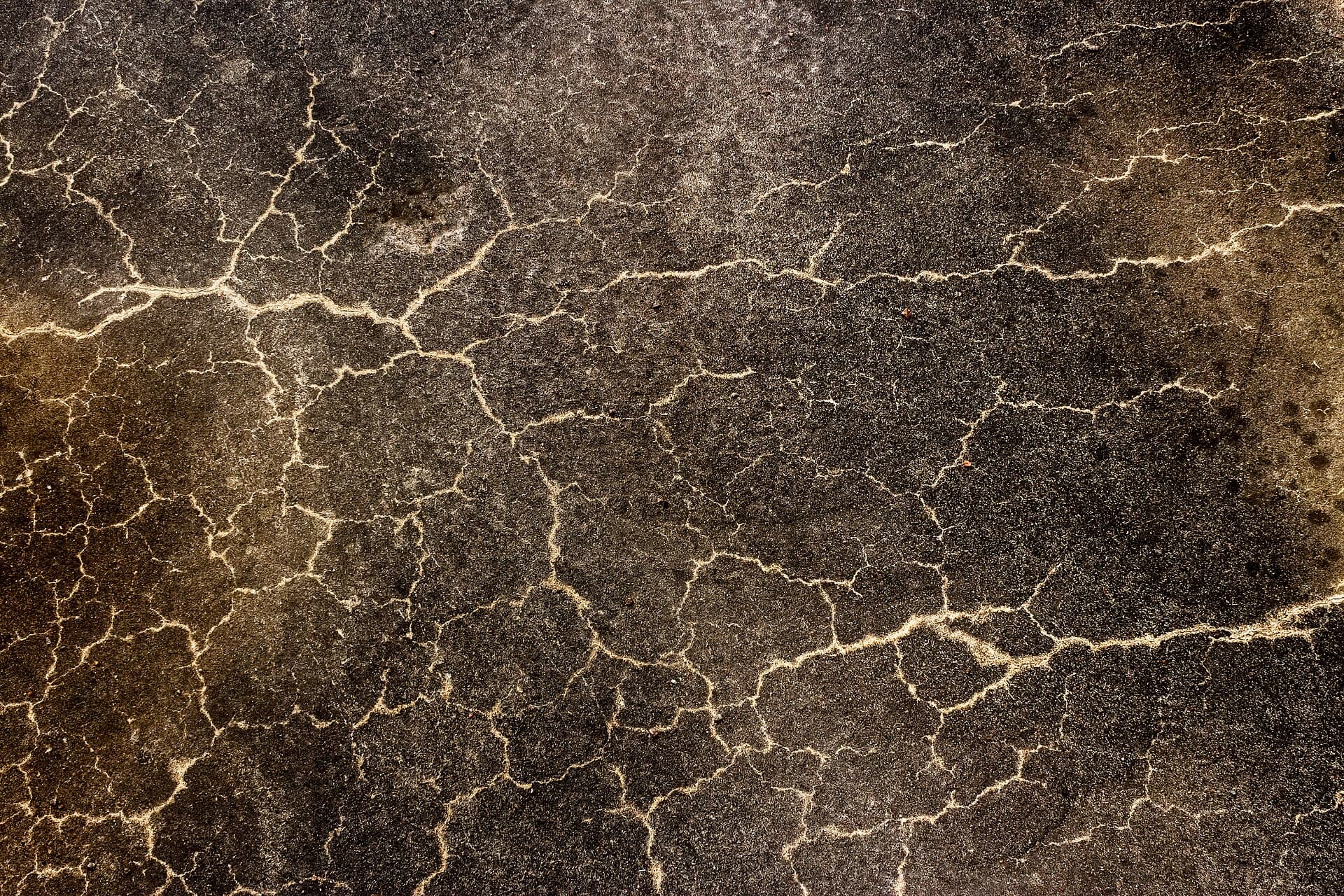
Plastic-shrinkage cracks are often a map: short, shallow, randomly oriented or aligned with yesterday’s breeze. They appear early, sometimes before the crew has left. They are ugly. They are rarely the house moving. Drying-shrinkage cracks are longer, tend to find the middle of a bay that was poured too large without a saw cut, and show up in the first weeks or months. Joints that were sawn too late are the same story with a straight edge.
Settlement and heave look different. The crack steps. It goes through the slab and into the brickwork, or it opens at a re-entrant corner and keeps going. It is wider at one end. There is a lip — vertical displacement — so that a broom catches. On a driveway, a lip at a joint after a wet week can be underscour. On a house, a lip at a corner is the clay or the fill voting.
Crazing is a fine network in the surface paste, like old china — a finishing conversation. Map cracking that is deep, with rust, on a coastal soffit is the steel. A crack that follows a pipe trench is pointing at the groundwork. Stand back and look at the whole member.
Displacement and the door that binds
Vertical displacement is the difference between a line and a step. If one side of the crack is higher than the other, the slab is not only shorter. It is no longer in one plane. That can still be a local washout under a path. It can be a house corner dropping. Measure it. A millimetre you feel with a fingertip is already worth a photograph. Several millimetres on a house slab is worth a professional.
Doors and windows are instruments. A door that binds in late summer on the laundry side of a Thornton house, then frees itself after the autumn rain, is often the clay doing what the soils essay said it would do. A door that has started to bind and has not released, or doors on two sides of the house that have started together, or a window that shows a widening gap at one corner of the frame: those are the house changing shape. Look at the cornices. Look at the external brickwork for a stepped crack that matches the door. The door is not the problem. The door is the gauge.
Floors that suddenly slope toward a corner, gaps under skirtings, a verandah that has parted from the house: same family. They are a reason to stop buying tubes of flexible filler and start buying an hour of engineering. If a path has moved downhill after a flood, you are in a scour conversation. Prop anything that looks like it might keep moving. Then call.
Overhead is a different ethic
A hairline on a path is a conversation about appearance and water ingress. A crack on the soffit of a balcony, stair or awning is a conversation about gravity. Coastal units in Newcastle East, The Hill and the first row at Merewether have a long history of spalling that begins as a rust stain and a fine crack and ends as a piece of cover on the footpath. If you can see the steel, if the cover sounds hollow, if there is a bulge, do not stand under it while you decide. Fence it. Call a licensed inspector. The journal will not soften that paragraph to make a nicer read.
Internal ceiling cracks in plaster are often the frame, not the slab. Do not use them as proof of a concrete failure without looking at the concrete. Do not ignore them if they match a stepped brick crack below.
Monitoring, which is work
A crack that is safe enough to live with is safe enough to measure. Photograph it with a coin, a ruler, or a printed gauge, in the same light if you can, every month for a season. Mark the ends with pencil so you can see whether it is lengthening. Note the weather: a dry March, a wet July, a week of leaking gutter. If you want an object, crack monitors are cheap and slightly more honest than memory.
What you are trying to learn is the derivative. Is it opening, closing, stepping, staying? A seasonal sine wave on a reactive site is information for an engineer, and sometimes it is information that you do not yet need an engineer. A one-way ratchet — each season a little worse, no winter recovery — is the letter you do not ignore.
Do not fill the crack before you have a baseline unless you must keep water out of a house. Filling is not always wrong. It is how people destroy the evidence. If you must seal against weather, photograph first, and use a flexible material that will show if the movement continues, not a rigid smear that will crack beside the old line and confuse everyone.
When to call whom
Call a concreter for a path, a driveway bay that has subsided after a washout, a saw-cut that was never made, a joint that needs resealing, a cosmetic hairline you are tired of looking at. Ask them whether the base is still there. A good one will tell you when they are the wrong trade.
Call a waterproofing specialist if water is entering a habitable room. Call a structural or geotechnical engineer if there is displacement on a house, stepped brickwork, doors binding on more than one wall, a crack that grows through the wet, or any doubt about a suspended member. Bring the photographs and the plumbing history. Call the strata manager before you stitch a common slab. If you are thinking of resurfacing, a structural crack in the base is a reason to stop. Overlays copy a step, then they peel.
What you can do this week
Clean the surface so you can see the line. Measure it. Photograph it. Look at the pattern in the whole wall or slab, not at the scariest inch. Check the obvious moisture: gutters, a lush strip of lawn, a tap that weeps, a tree against the edge beam. Walk the doors. Tap the overhead concrete. Write it down.
Then decide which family you are in. Hairline, early, no step, no rust, a path or a driveway bay: live with it, monitor it, or repair it as a surface. Seasonal, on clay, doors that recover: read the reactive clay essay and keep the diary through a winter. Displaced, progressive, overhead, or matched to brickwork: make the call.
Width, pattern, displacement, doors, time: those five are enough to have an adult conversation with the right trade. The rest is the Hunter being the Hunter — a place that shrinks a slab in the heat, swells a clay in the wet, and still expects you to know the difference between a line and a step.