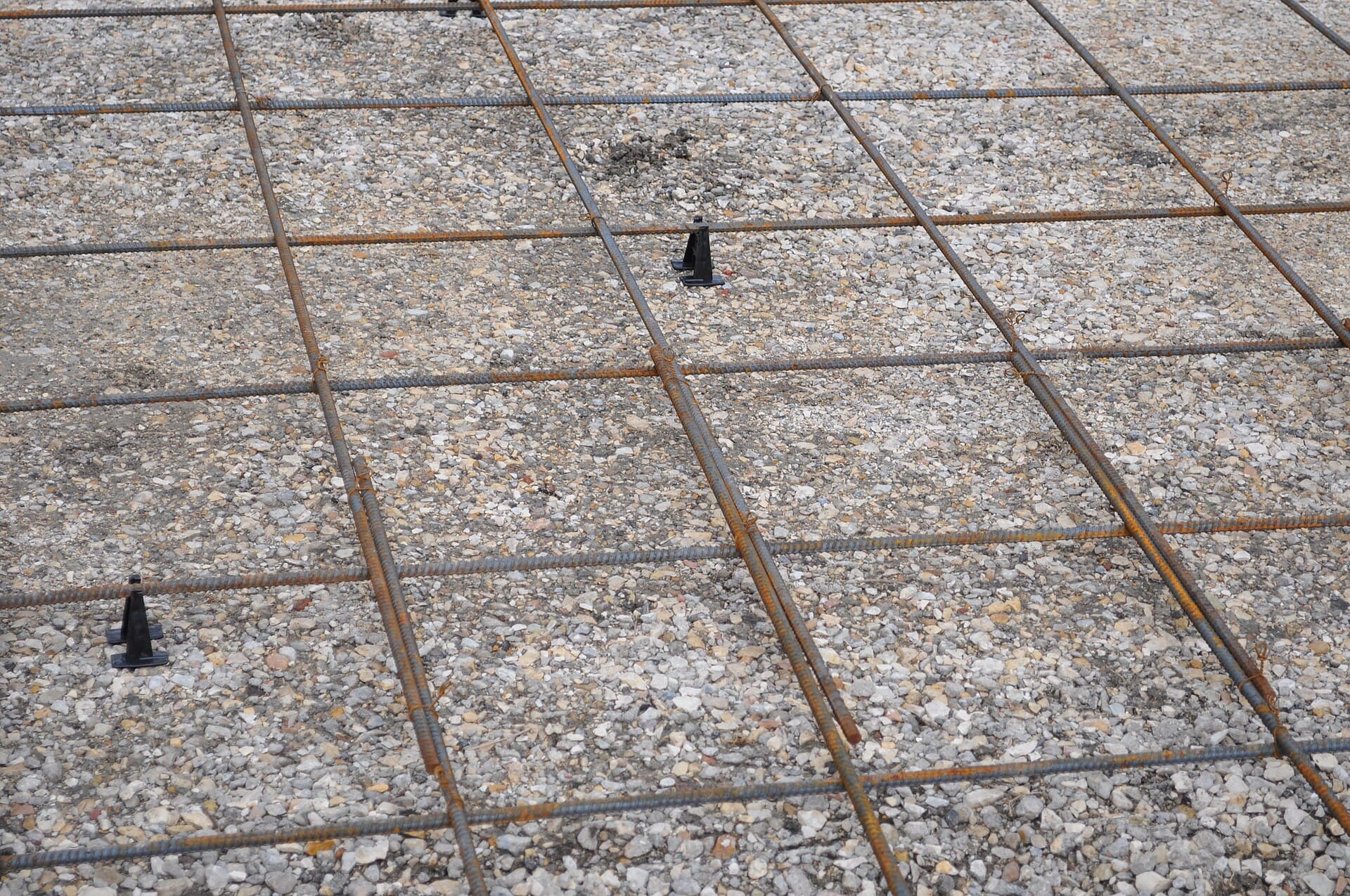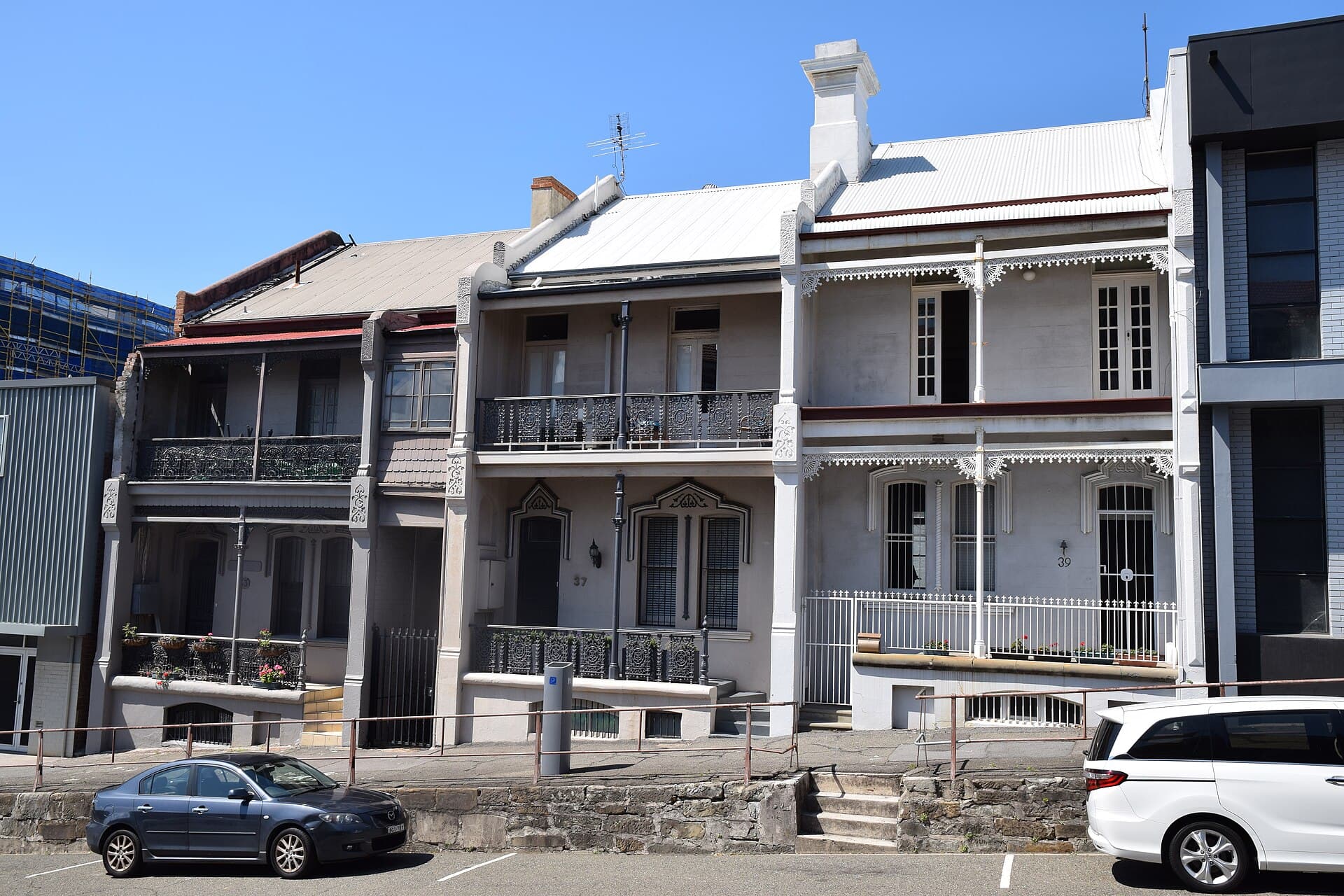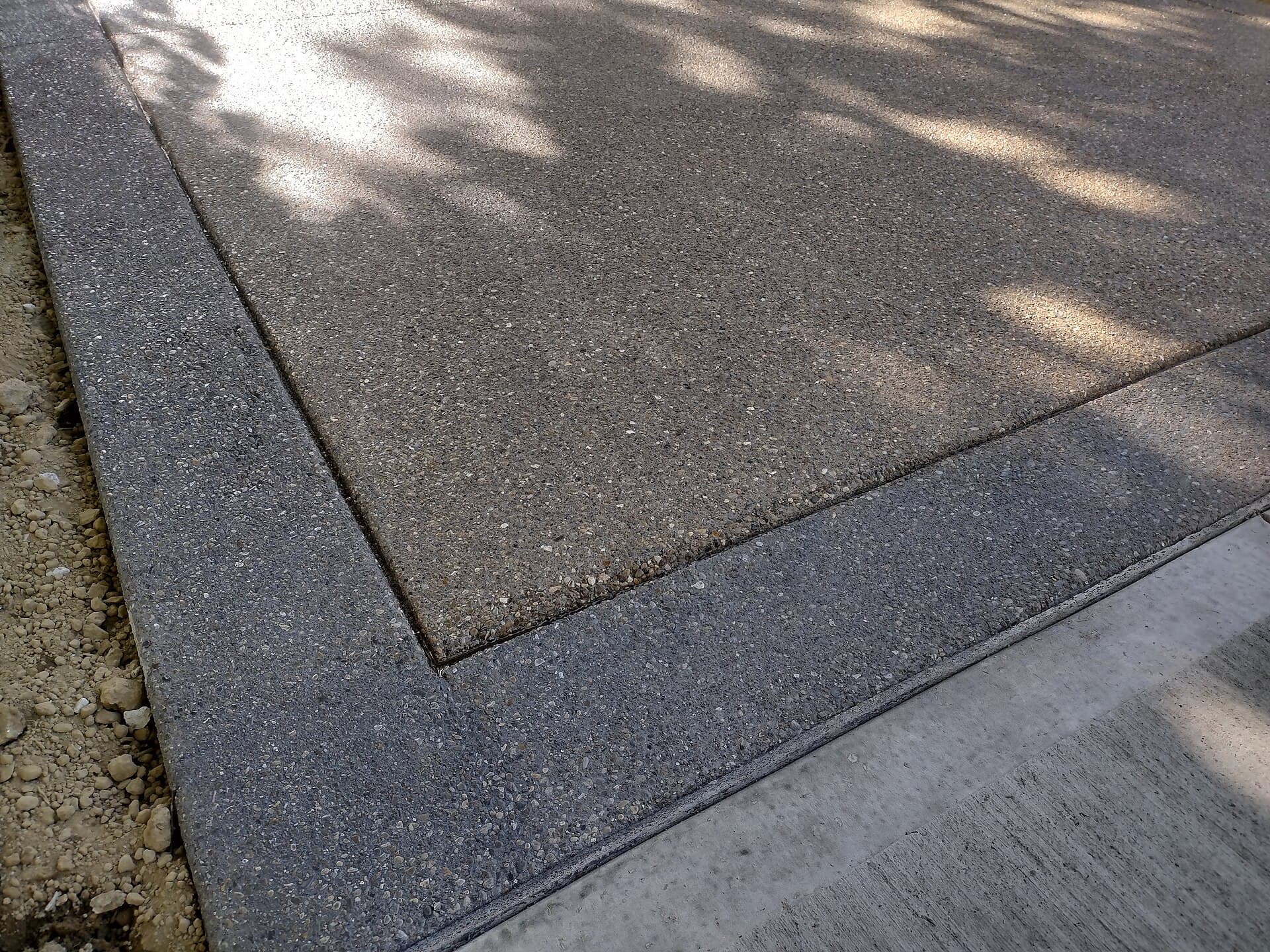
A broom-finished driveway in Hamilton and an exposed-pebble driveway in a new estate at Cameron Park are both “concrete”. They are not the same object. One is a working surface that recedes beside a weatherboard and a front hedge. The other is a deliberate piece of jewellery — river stone held in a grey or oxide matrix — that announces the house from the street. Neither is wrong. The mistake is choosing a finish as if it were a paint chip and discovering, two summers later, that salt, tyres and a hose have rewritten it.
This comparison belongs with the rest of the driveways and crossovers book. It assumes you have already decided that concrete, not pavers, is the material — if you have not, read concrete versus pavers for Hunter homes first — and that the slab itself has been briefed for thickness, fall and steel. Finish is the last decision that still belongs to the pour. It is also the one neighbours will notice.
What the finishes actually are
Plain concrete, in the yard’s language, is a slab whose face is the sand-and-cement paste. A wood float leaves it quiet. A broom, dragged across the wet surface, leaves a directional texture that sheds water and gives a shoe or a tyre something to hold. That broom finish is what City of Newcastle still wants on most public crossings: honest, pale, slightly ribbed, and easy to match when the next crew repairs the footpath.
River pebble and the wash-off
Exposed aggregate is the same slab with the paste washed off the top few millimetres so the stone shows. In the Hunter the stone is usually a rounded river pebble — cream, biscuit, charcoal, or a blend — broadcast or batched into the mix and revealed with a surface retarder and a hose. The look is familiar from every coastal renovation of the last twenty years. Done well, it is a dry creek bed you can park on. Done badly, it is a gravel rash with bald patches where the wash-off went too deep.
Oxide sits between them. A mineral colour — oxide red, charcoal, sandstone, a green that never quite looks like moss — is batched through the mix so the paste itself is no longer grey. You can broom an oxide slab or expose it. Colour is not a coating. It is in the cement. That is its virtue and its limit: you cannot change your mind with a roller, and ultraviolet light on a north-facing Merewether drive will still bleach the top of the paste over a decade.
Stamped and stencil work exist. They are a different essay. For a residential driveway that has to take a weekly shop and a bin night, the live choice is broom, exposed stone, or a coloured version of either.
Wet grip is a texture argument
Newcastle rain is not a drizzle that you wait out. It arrives, sits, and makes a driveway into a test of the last hour of the pour. A steel-troweled slab — the kind of glass finish that looks “professional” to someone who has only seen internal floors — is a liability outside. Shoes skate. A car arriving down a slope locks a wheel.
A broom finish, cut while the paste still takes a mark, is the cheapest reliable answer. The ribs should run across the slope so water is not channelled straight down a wheel path. Exposed aggregate, if the pebbles stand proud, is as good or better. The stones break up the film of water. The danger is an exposure that is too timid — paste still smeared over the stone — or a sealer that turns the face into a gloss. Sealer is not automatically a slip problem, but a high-build, high-gloss coat on a shallow exposure is how you get a driveway that looks expensive and behaves like a wet boat ramp.
If you would not walk it in socks after a southerly buster, do not seal it to a shine and call it done.
On a sloping block the finish and the drainage are the same conversation. Sloping driveways is the place for falls and channels. Here the point is simpler: texture is a safety finish, not a style extra.
Salt, tyres and the slow polish
Within a few streets of the water the air is a weak acid with a salt habit. It does not dissolve a driveway overnight. It etches paste, fades oxide, and finds any steel that was given lazy cover. A broom-finished grey slab weathers to a softer, slightly dusty white. An oxide slab loses the top of its colour first in the wheel paths. An exposed pebble driveway has a different fate. The stone itself is usually tougher than the matrix. What changes is the matrix around it, and the tops of the pebbles where two tonnes of car have been polishing the same two tracks for years.
Tyre polish is the finish people forget to budget. A cream pebble that looked lively on day one becomes a pair of dull stripes from the garage to the street. A charcoal blend shows the same stripes as a paler ghost. You cannot stop this without stopping the car. You can slow it by choosing a blend that already contains the colour the polish will reveal, and by not expecting a showroom face in year eight.
Coastal houses should read the salt-air essay before they fall in love with a dark oxide. Dark surfaces show salt bloom, tyre dust and every drip from a beach towel. They also run hotter in January, which matters if children cross the slab barefoot between the car and the front door.
Maintenance is a hose, a sealer, and honesty
A plain broom finish asks for almost nothing. Sweep it. Wash off the oil before it becomes a map. Recut a joint if a crack opens beside one. The slab will stain — this is Newcastle, not a catalogue — and the stains will be less visible on grey than on a pale oxide.
Exposed aggregate asks for more, or at least more often. Organic muck lodges between pebbles. A pressure washer used like a weapon will tear paste out and loosen stone. A garden hose, a stiff broom and patience are the tools. Most suppliers will sell a penetrating or topical sealer that darkens the stone and slows the uptake of oil. Sealing is not optional marketing. It is a maintenance cycle. Budget to redo it every few years on a coastal drive, longer inland if the face is still shedding water.
Repairs are where exposed work shows its cost. A broom-finished bay can be saw-cut and replaced with a cousin of the original grey. It will not disappear, but it will recede. An exposed bay replaced two years later will not match. The pebble source changes. The wash-off is deeper or shallower. The sealer history is different. If you still have a labelled bag of the original stone, a small patch can be made decent. A large repair will always read as a large repair. That is not an argument against exposed aggregate. It is an argument against treating it as a disposable surface.
Cost, character and the street
The private slab is where the money moves. As a working range, not a quote, exposed aggregate in the Hunter often sits a quarter to a half above a plain broom pour of the same thickness, once you count selected stone, retarder, wash-off labour and the first sealer. Oxide is a smaller premium — a colour dose and a more careful finish — unless you then expose it as well. The crossover, in Newcastle, is usually still plain concrete. You do not save money on the verge by decorating the driveway, and you should not assume council will let the pebble run to the kerb.
Hamilton is not a new estate
Character is the argument that does not fit a spreadsheet. In Hamilton, Cooks Hill and The Hill, a quiet broom or a restrained sandstone oxide sits more comfortably beside brick, tessellated tile and a timber verandah than a high-contrast charcoal pebble with a glossy coat. Those streets already have enough visual noise. In a new estate at Chisholm, Thornton or the western edge of Lake Macquarie, exposed aggregate is the vernacular. Every second house has it. Choosing plain grey there can look like a cost-cut rather than a taste. Neither observation is a rule. It is a way of asking whether the driveway is joining the street or arguing with it.
A finish brief that will still make sense in year eight usually names four things:
- the texture you will walk on after rain, not only the one in the sample crate
- whether the verge must stay plain broom under council's drawing
- a pebble blend you can still buy if a bay is cut out
- a sealer cycle you will actually fund, especially within a kilometre of the water
Planning the driveway still comes first. A beautiful face on a slab with no fall, no joints and a soggy base is a beautiful face on a failure. Finish cannot rescue structure. It can only tell the truth about how you want the house to meet the street, and how much work you are willing to do with a hose.