A concrete driveway is a decision you make once and then live under. A paved driveway is a decision you keep making: a weed in a joint, a unit that has dropped after a wet August, a run you lift because the plumber has to reach a pipe that nobody marked. Both can look right on a Hunter house. They fail in different dialects.
The comparison belongs in the driveways and crossovers hub because the street sees the surface and the owner lives with the maintenance. It is not a morality play. Concrete is not “more serious”. Pavers are not “more charming”. Each is a system — slab-and-steel, or units-on-a-bed — and the Hunter will test the system you actually built, not the one in the brochure.
Movement on clay is the first argument
Inland of the dunes, much of the lower Hunter is reactive clay. Maitland, Rutherford, parts of Wallsend, the western Lake Macquarie suburbs, pockets through Charlestown: the ground swells when it wets and shrinks when it dries. A concrete slab on that ground will move. If you have given it joints and a compacted base, it will move at the joints. If you have not, it will write its own.
Pavers move too. The difference is that a unit can be lifted. After a wet year a run beside a garden bed can be taken up, the bedding sand or grit corrected, and the same bricks put back. That is the genuine advantage, and it is why older paved drives in the Hunter are still serviceable while some of their concrete neighbours are a map of uncontrolled cracks.
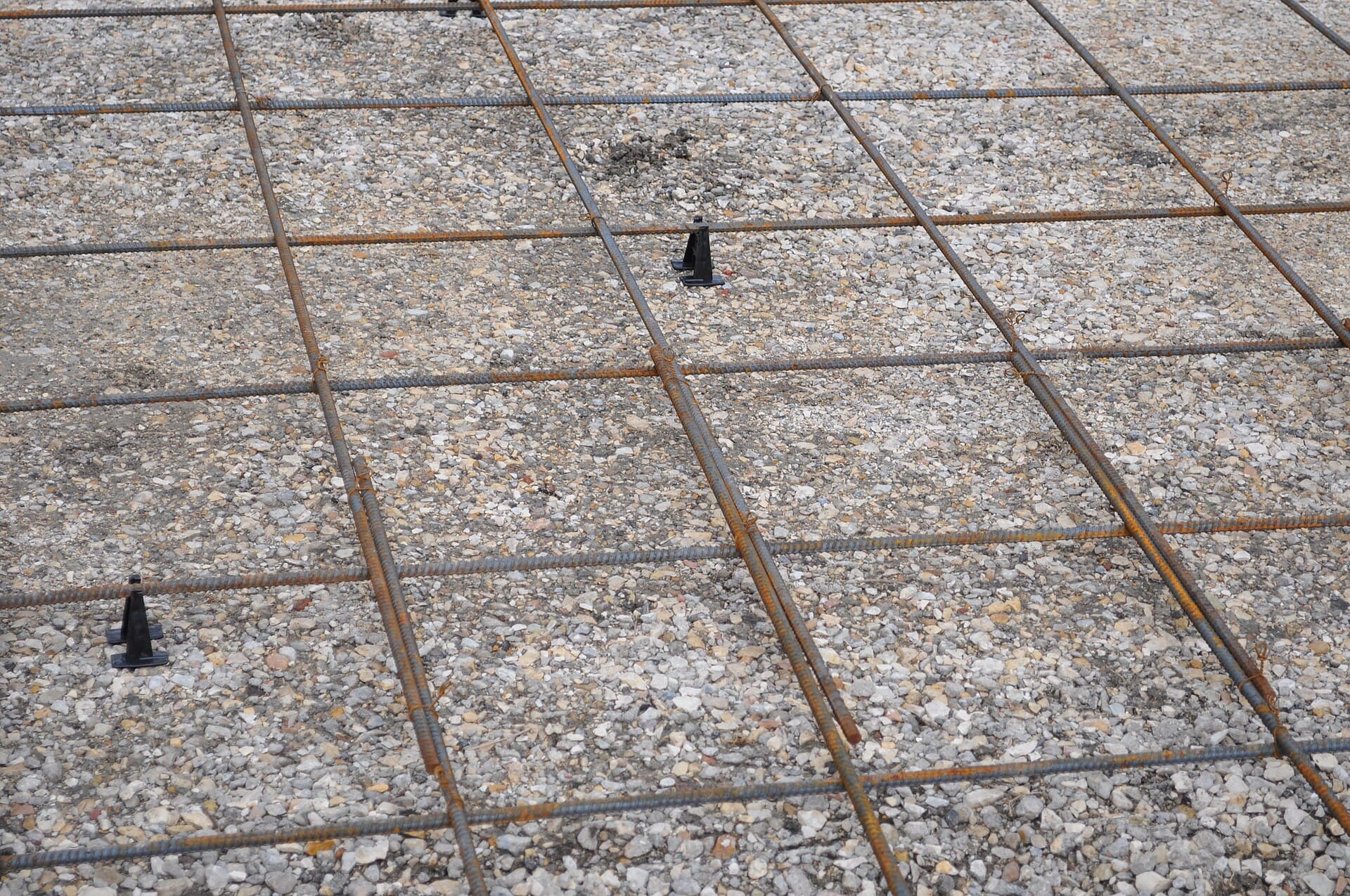
The advantage is not magic. Pavers need a load-bearing base — compacted crushed rock, not a wheelbarrow of brickies sand on last year's dirt — and a rigid edge restraint that stops the field from walking sideways under tyres. Without those, the first summer of shrinkage opens joints, the first truck to the skip pumps the bedding, and you have a trip hazard with a heritage colour. On bad clay, both systems are only as good as the groundwork. Read planning a concrete driveway for the slab version of that sentence. The paver version is the same sentence with more edges.
Weeds, trip edges and the fiction of a maintenance-free surface
A concrete slab has saw-cuts. Weeds will find them if you let silt and compost collect. They will not find a field of joints the way they find a paved drive. That is the weekly difference. In a Hamilton garden with a jacaranda and a compost habit, a paved driveway is a weeding job. Polymeric sands and jointing compounds slow the problem. They do not end it. Someone still has to look down.
Trip edges are the safety difference. A slab, once it has curled or dropped at a joint, presents a single ridge. Pavers present a collection of small ridges, any one of which can catch a visitor at night. On a slope the downhill edge of a paved field is where units escape if the restraint was decorative. A broom-finished slab does not unravel a unit at a time. It cracks, which is a different repair and a different look.
Heat is the summer argument. Dark concrete and dark pavers both cook. A charcoal oxide slab in January at Merewether will burn feet. A dark clay paver will do the same. Lighter units and a pale broom finish stay more civil. Pavers have a slight edge if you choose an open joint and a lighter clay, because the joints break up the radiating plane. It is not a reason to choose pavers by itself. It is a reason not to pick a black surface and then complain about January.
Civic, Cooks Hill and the large grey plane
When the street is older than the car
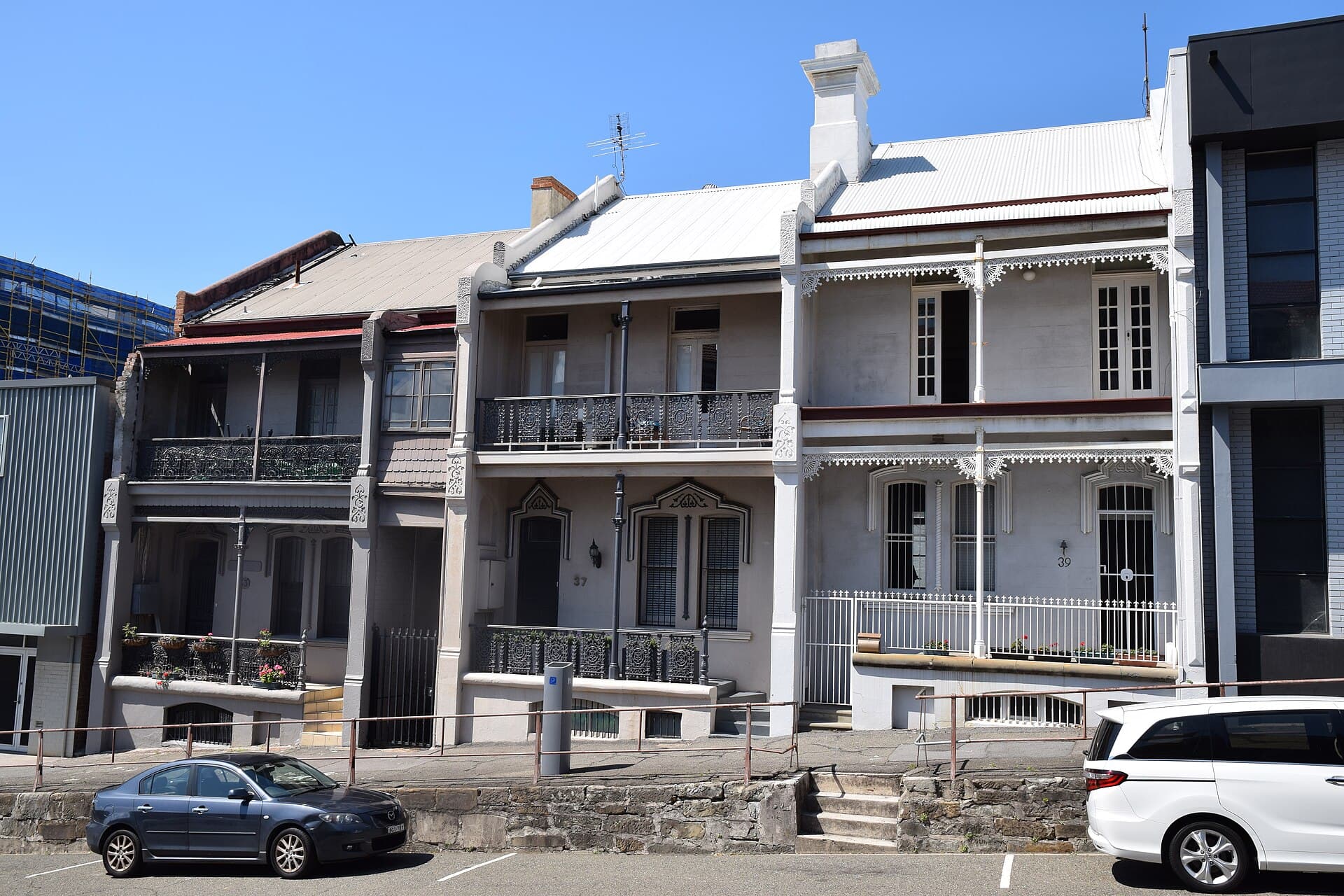
Heritage streetscapes are where the aesthetic argument is real. The terraces around Civic, the brick and timber of Cooks Hill, the front gardens of The Hill and parts of Hamilton: a six-metre-wide plain slab can look like a small car park has been attached to a house that was designed for a side gate and a horse. Exposed aggregate can be worse if the pebble is a high-contrast blend that belongs in a 2014 estate.
Pavers — particularly a clay unit that already exists in the district, or a simple concrete paver in a colour that recedes — can keep the frontage in the same visual family as the footpath and the neighbouring garden edges. They can also be laid to a narrower, more walk-like proportion that does not consume the entire setback. That is a streetscape win, and it is why council heritage officers, when they have a view, often prefer a broken surface to a single pour.
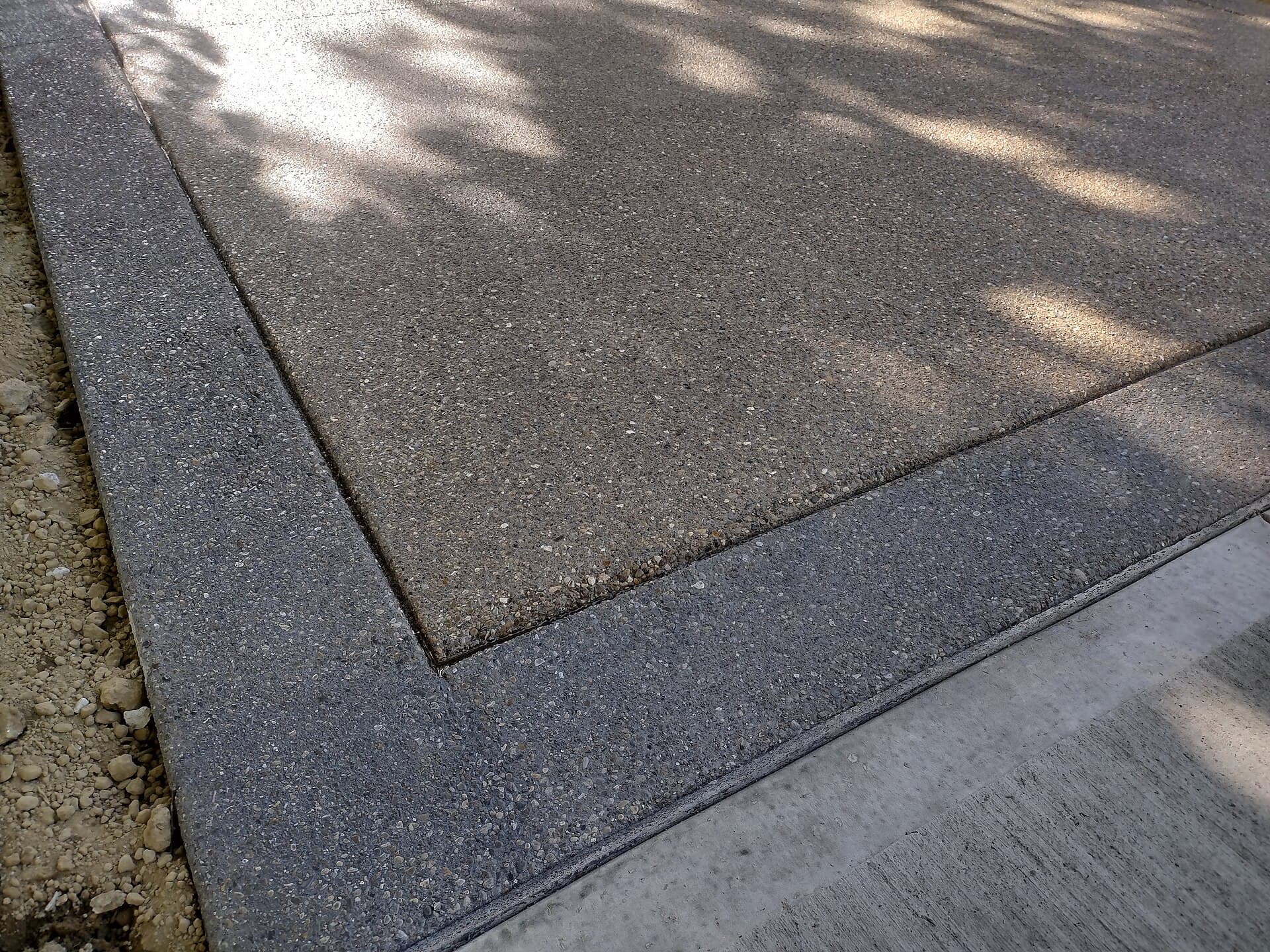
It is not automatic. A cheap, bright concrete paver laid in a herringbone that fights the house is not “heritage”. It is a catalogue page. The test is whether the driveway joins the street or shouts over it. Exposed aggregate versus plain concrete is the finish essay if you have already chosen a slab. If you have not chosen a material, stand in the street and ask which surface would still make sense if the car were not there.
A driveway should be able to empty of cars and still belong to the house. If it only looks right with two white SUVs on it, it is a parking lot.
Cost over fifteen years, not over a long weekend
The first invoice lies. A thin paved job can undercut a properly based slab. A slab quoted without steel, joints or a crossover can undercut a proper paved job. Neither price is information.
Over fifteen years in this climate, the honest ledger looks more like this. Concrete: a higher first cost if it is done properly, then years of almost no attention, then a possible saw-cut repair or a resurfacing if a bay fails or a service is cut through it. Pavers: a first cost that should include a serious base, then a recurring spend on weeds, joint sand, the occasional reset, and a larger reset if a pipe fails or a tree root lifts a run. If you enjoy that kind of work, the paver ledger is not a burden. If you thought you were buying a finished object, it is.
Permeability is the environmental line people reach for. A paved surface with open joints can take some rain into the bedding. In sand near the coast that is useful. In clay it is often theatre: the water sits in the bedding and has nowhere to go, which is how you get a soft paver field after a low. A concrete slab is a catchment and must be drained as one — see sloping driveways and drainage if the block falls the wrong way. If permeability is the actual goal, the adult versions are a designed permeable paving system or less paving, not a hope that weeds equal drainage.
The planning and costs hub is where quotes and contractor habits live. Use it. Do not use a weekend as a financial plan.
The DIY myth, and when pavers still win
Paving looks like a Saturday. It is not, not at driveway scale, not if a car will use it. Excavation, base, compaction, edge restraint, levels, and a consistent joint: that is a trade. A path to the Hills hoist can be a home job. A six-metre run that takes a van is how you buy a trip hazard and a redo. Concrete has its own DIY mythology — a mixer from the hire shop and a YouTube float — and it is worse, because you cannot pick up a slab on Sunday and start again.
Three jobs pavers still win
Pavers win in ordinary Hunter situations that a slab handles badly:
- services are shallow or uncertain — a Cooks Hill house with a century of ad-hoc plumbing is a poor candidate for a single pour over the only access to the sewer
- the work has to be staged — you can pave the first bay this year and the second when the extension is finished
- the streetscape would be bullied by a large plane, or a matching unit already sits on the path and the porch
Units come up. A slab comes off with a saw. A slab wants to be one pour, or at least one planned set of pours with joints that look intended.
They do not win because a neighbour “did theirs in a week”, or because a slab feels irreversible and that makes you nervous. Irreversibility is sometimes the point. A well-jointed, well-fallen concrete driveway, briefed the way the rest of this hub describes, is a finished civic object. A well-based paved driveway is a finished civic object you can open. Choose the one whose maintenance you will actually do, on the ground you actually have, in the street the house already belongs to.