A garage slab in Newcastle has a harder life than the living-room floor and a worse press than the driveway. It is poured last, cured least, parked on earliest, and inspected only when something leaks. Then the owner stands in the roller-door opening, looks at a map of lines, and asks whether the house is falling over.
Usually it is not. Sometimes it is the start of a more expensive sentence.
Most garage cracks are born in the pour and the week after it, not in a mysterious later failure.
This essay is the field guide to the difference. It lives with the other slabs and foundations pieces.
What a garage asks of a slab
A garage is a workshop, a store and a road with walls. It takes a turning load at the door, parked cars, a jack, oil, battery acid, and water from the roof, the driveway and the washing machine. Coastal suburbs add sand and salt. Inland, clay moisture arrives if paving was butted hard against the brickwork.
The slab is usually thinner than the house raft and less carefully jointed than a good driveway. It is often a leftover of the house pour, or a weekend job with a different crew. That split is visible five years later.
Plastic shrinkage: the crack that arrives before knock-off
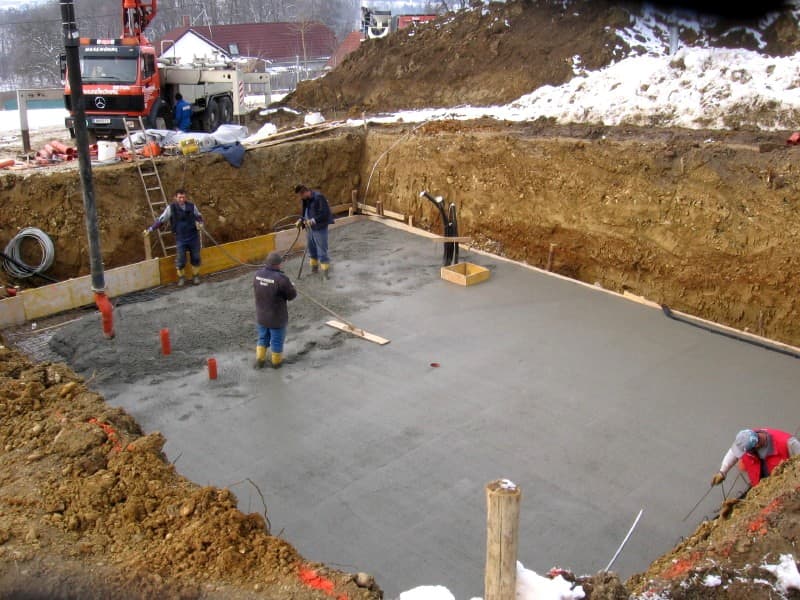
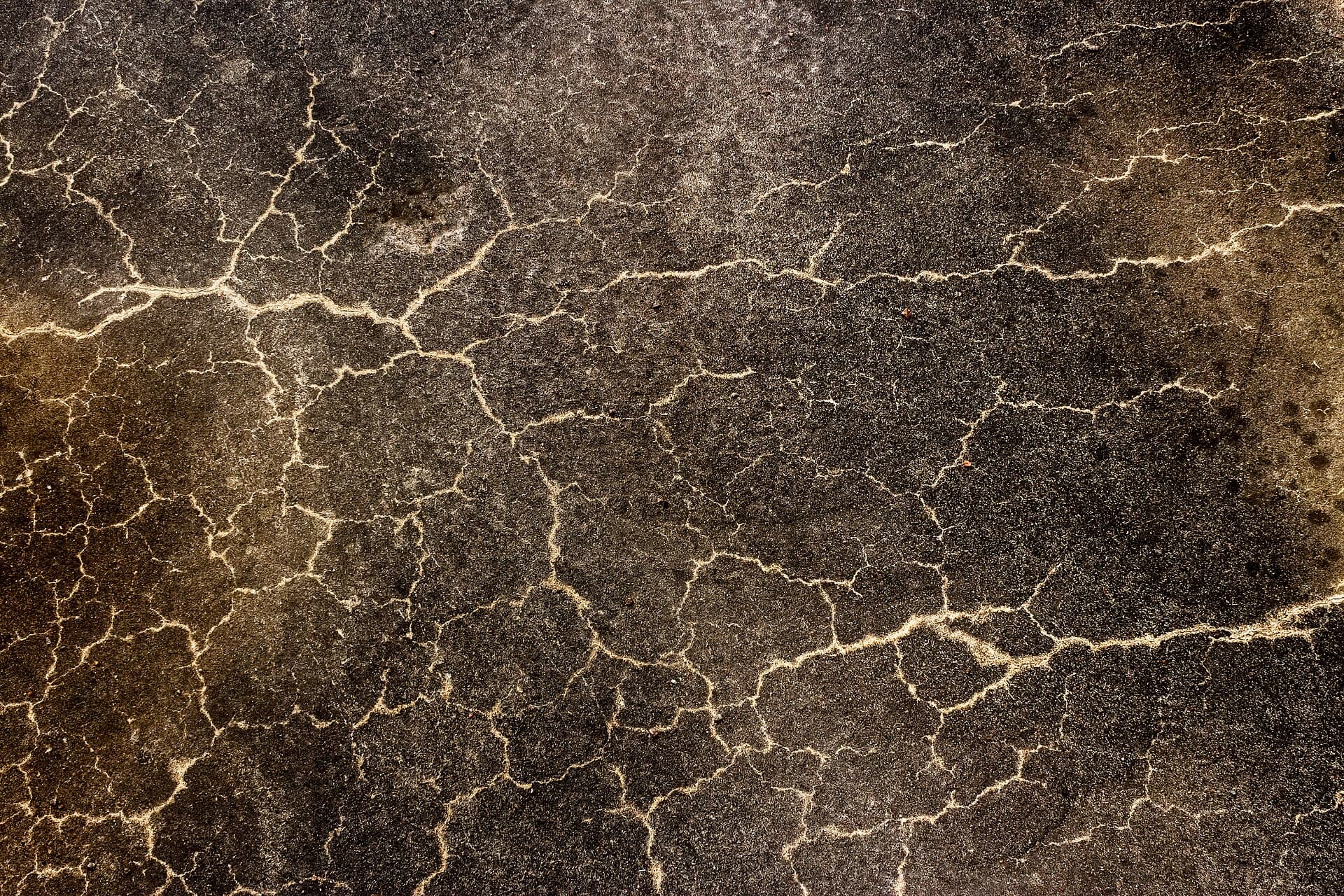
Plastic shrinkage cracks form while the concrete is still plastic — hours, not months. Water leaves the surface faster than bleed water can replace it. The surface tears. The tears are often parallel, shallow, and clustered where the wind had a run: near the open door, along a western wall, on a January afternoon in Fletcher when the nor-wester and the slab temperature agreed.
Humidity at 9am is not humidity at 2pm on a slab in a black garage shell with a tin roof ticking. A breeze off the harbour is dry enough, at slab level, to skin a pour. The myth that “coastal air cures it for you” is dealt with in curing concrete in humid coastal NSW. Fog-spray, plastic or a compound belongs on the garage the same as on the house.
Pour in the cooler window. Do not add water on site. Get the curing on as soon as the surface will take it. Fine plastic-shrinkage cracks are usually cosmetic. They are also a confession that the afternoon was lost.
Joints that were never cut
The second common garage crack is a long, fairly straight line that found the shortest path across the slab — often from the roller-door jamb to a re-entrant corner at the access door, or down the centreline between two cars. That is shrinkage after hardening, and it is what control joints are for.
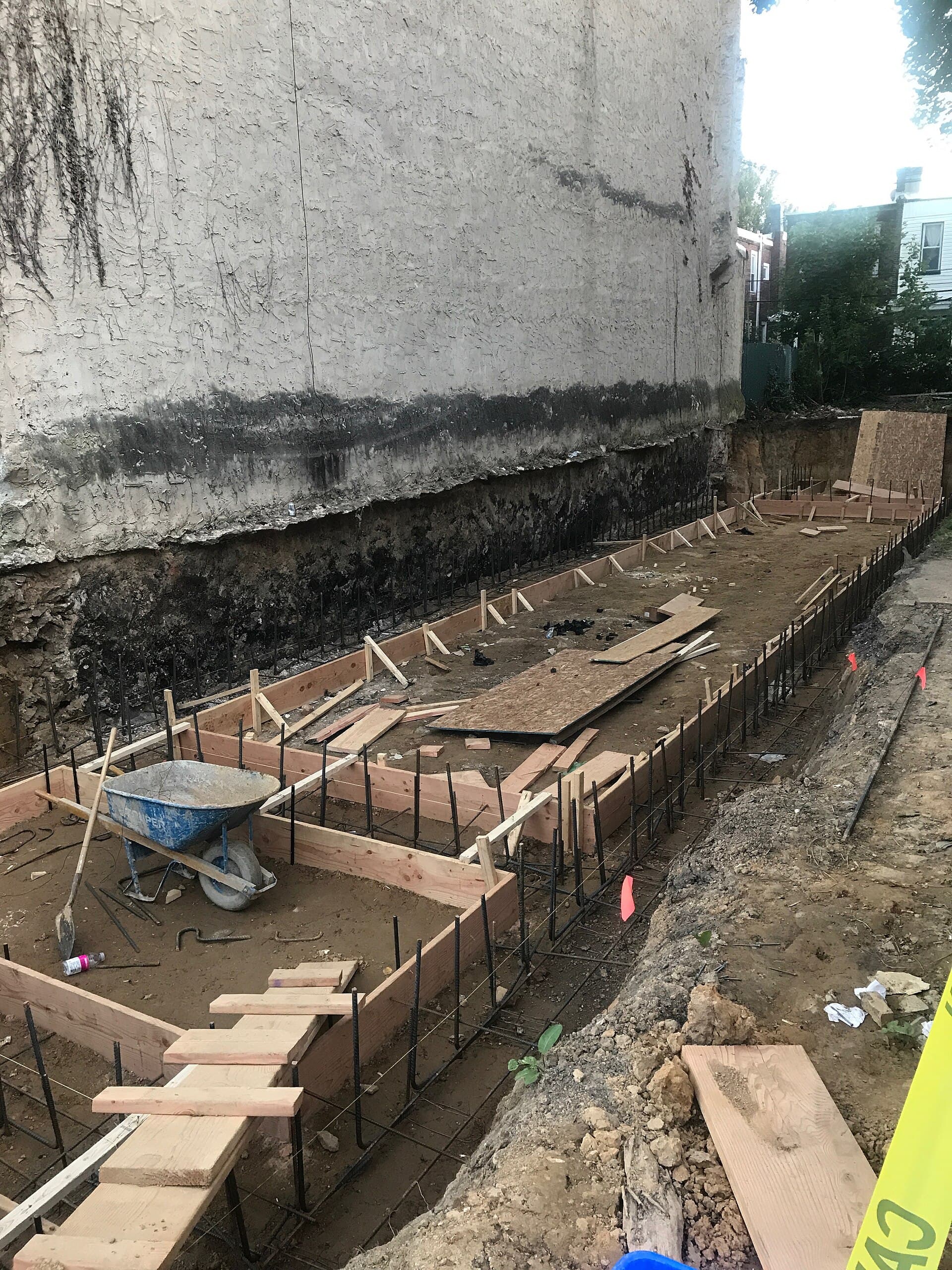
A two-car garage is large enough to need a planned grid. Isolation joints at the house wall, at any pad for a stair, and at the driveway if the two pours are separate. Saw cuts that break the rectangle into bays a concreter would be happy to see on a small industrial floor. The house wall joint matters in the Hunter because the house raft and the garage slab rarely share the same thickness, the same pour day, or the same moisture regime.
People skip the saw because they want a “seamless” floor for a future epoxy. Epoxy on an unjointed slab is a glossy map of every crack the slab was always going to make. Cut the joints, then coat. If you already have the crack, read hairline cracks versus structural cracks before you grind.
Re-entrant corners — the notch where the pedestrian door sits, the return around a storage alcove — concentrate stress. A bar or extra mesh across those corners is cheap. A crack that starts there and runs to the pit is the slab explaining geometry.
Point loads, and the star under the jack
Garage floors collect habits. The same corner gets the trolley jack. The same strip gets the motorbike stand. The same edge gets the trailer jockey wheel when someone “just parks it in overnight”. Each of those is a small pile driver.
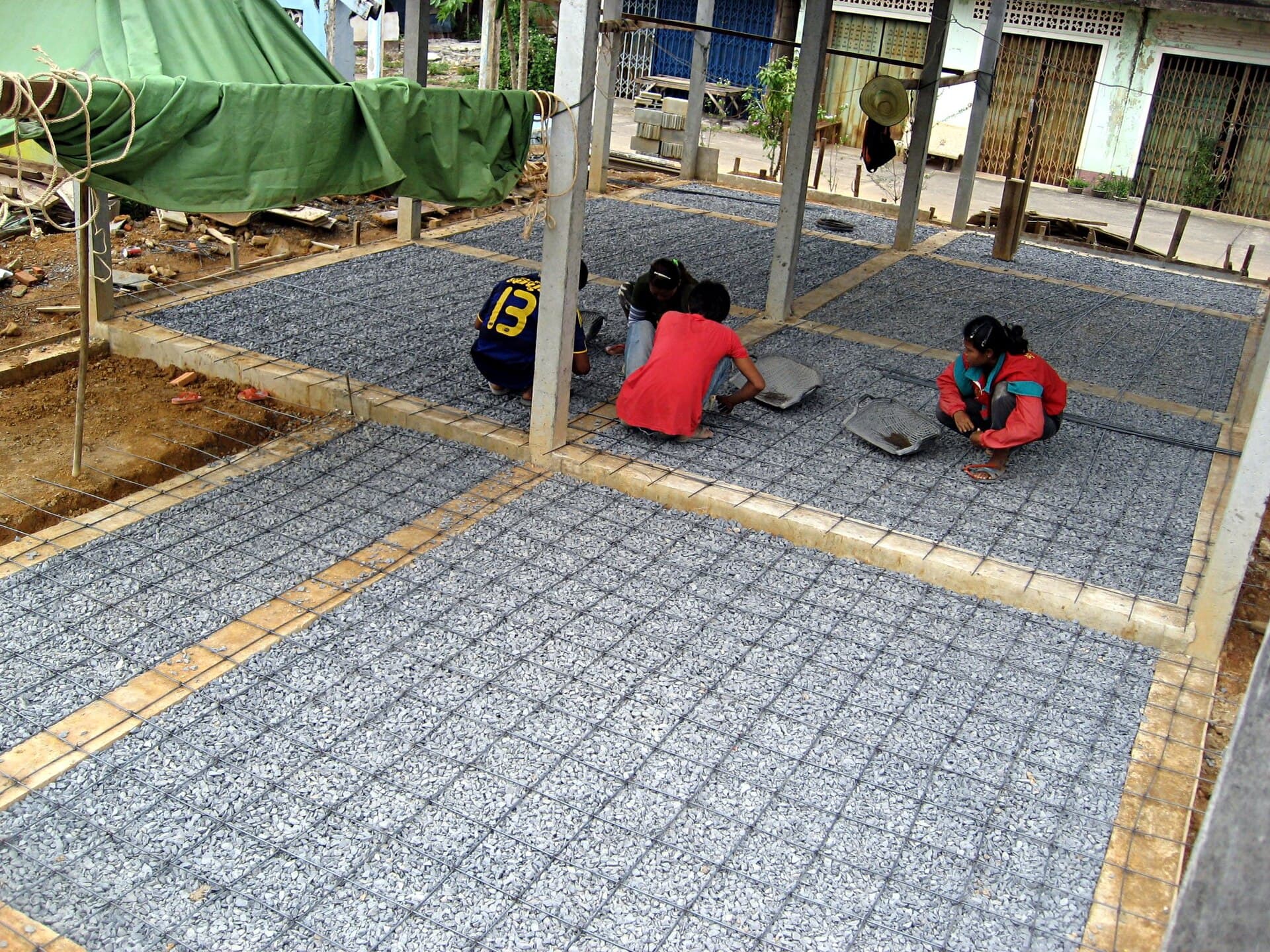
A well-made 100 or 125 mm slab with mesh in the right place will take a car on tyres indefinitely. It will not love a jack repeated on the same 150 mm circle, especially if the mesh has slumped toward the soffit and the surface is a paste-rich skin. The failure is a star crack or a shallow crater. It looks dramatic and is often still serviceable. It is also a prompt to put a steel plate down and to stop pretending the slab is a hoist.
Racking along a wall, a loaded freezer, a stack of tiles from a renovation: all of them write lines if the slab was poured as a thin, joint-free tray. If the garage was always going to be a workshop, it wanted the same thinking as a shed slab — thickness, mesh, joints — not a leftover house mix screeded between brick walls.
The leaking roof that looks like a slab problem
A surprising number of “rising damp in the garage” stories in Newcastle are downpipes. A rear gutter that dumps behind the garage, a valley that overflows in an east-coast low, a driveway that falls toward the door because the crossover was the priority: water arrives at the slab edge, the clay or the fill wets up, and the edge lifts or drops a few millimetres. The crack that follows is seasonal. It opens in a wet July and closes, a little, in a dry March.
Look up before you look down. Stains on the blockwork, soft ground along one wall, a downpipe that ends on soil, a garden bed piled against the edge beam of the house-and-garage raft — those are moisture-regime failures, the same family as the ones that move a house on Class M clay. The slab is the messenger.
Internal leaks matter too. A hot-water unit that dripped for a year, a freezer defrost that ran to the same corner, a dog wash that never quite reached the drain: local saturation under a slab that was poured without a membrane will find a crack and decorate it with efflorescence.
Rust bleed, and when the steel is talking
Orange lines that follow a grid are not rust from a stored bicycle. They are the mesh, or a bar, telling you the cover is gone or was never there. Chlorides from beach sand and from the air in Stockton, Newcastle East and parts of Merewether accelerate the conversation. Once steel rusts it expands. The concrete splits along the bar. That is spalling’s early cousin.
A rust bleed is worth a closer look than a hairline shrink crack. If the steel is close to the surface and scaly, you are in repair territory: expose, treat, patch, and accept that the line will stay visible. If the rust is only a stain from a tool that sat through winter, it will clean. The distinction is whether the stain follows the reinforcement.
Do not wash a coastal garage with seawater, and do not leave beach sand piled against the wall. Pair this with salt-air durability if the door faces the beach.
When a crack is cosmetic
Tests that do not need a laboratory
A crack can be ugly and still be doing no structural work. The useful tests are ordinary.
- Width. A hairline you cannot get a fingernail into, that has not grown over a season, is usually shrinkage.
- Step. If one side is higher, the slab has moved differentially. That is not a paint problem.
- Pattern. Random crazing and plastic-shrinkage maps are surface. A single wide crack from door to pit, or a crack that continues into the brickwork, is a system talking.
- Water. A crack that weeps after rain, or that grows white salts, has a moisture path. Find the water.
- Rust. A crack that bleeds orange along a straight grid is steel.
Cosmetic cracks can be filled for cleanliness and for the future coating. They do not need carbon-fibre theatre. They do need honesty: filling a moving crack is a maintenance cycle, not a cure. Sealing concrete helps a stable floor shrug off oil. It will not knit a slab that is still hinging.
Prevention is less mystical than the internet wants it to be. Prepare the base. Put the mesh on chairs. Isolate the house. Cut the joints. Cure for a week. Keep the roof water off the edges. Put a plate under the jack. Do not wash the car in a way that leaves a permanent pond at the back wall. If the garage is on the same raft as the house, treat the moisture regime of the whole platform as one job — the lesson of reactive clay applies at the garage door as much as at the lounge.
A garage slab is allowed to look like work. It is not required to look like a ruin. The line between those is usually a joint that was cut, a roof that was maintained, and a week of curing that nobody photographed.