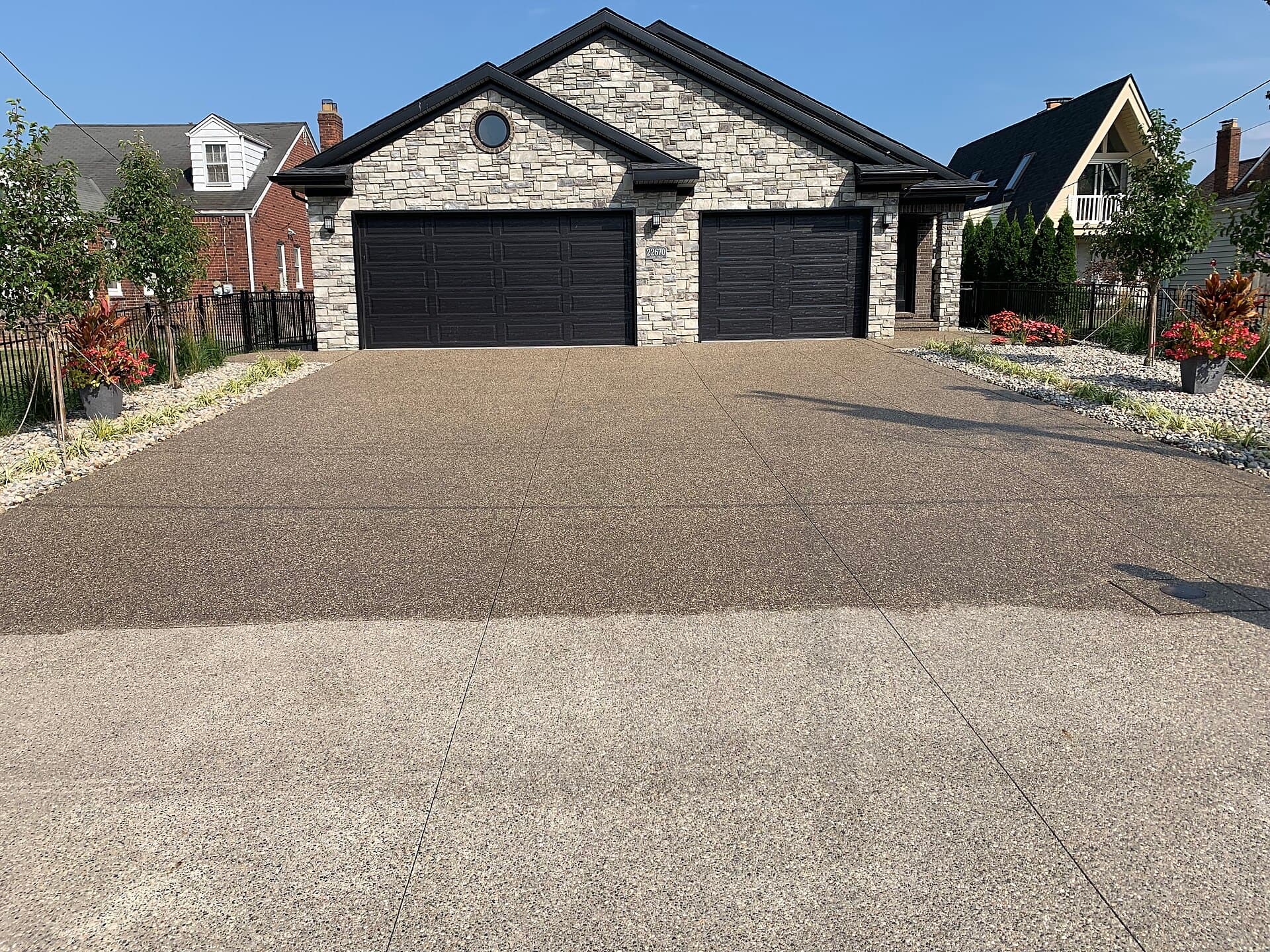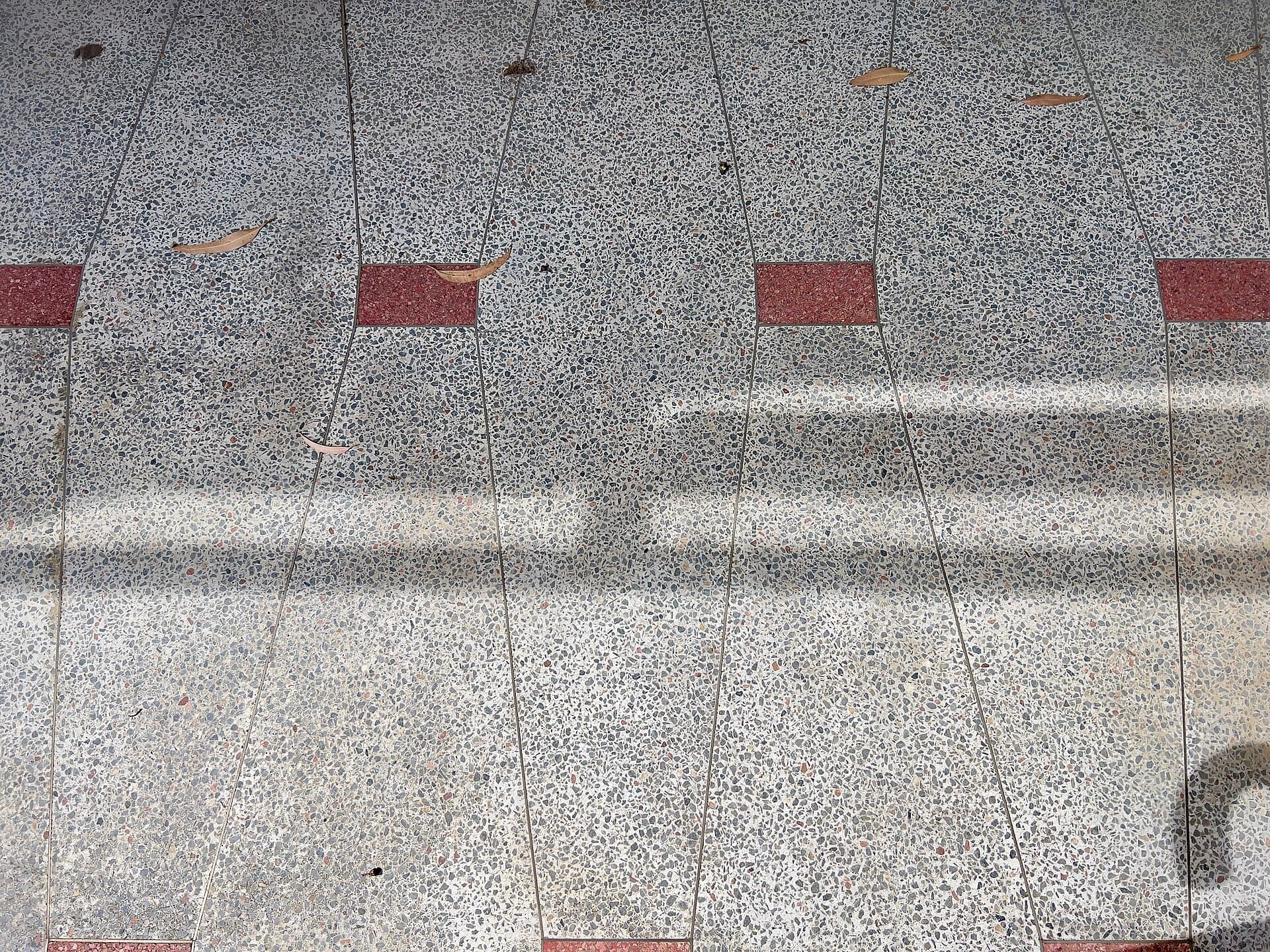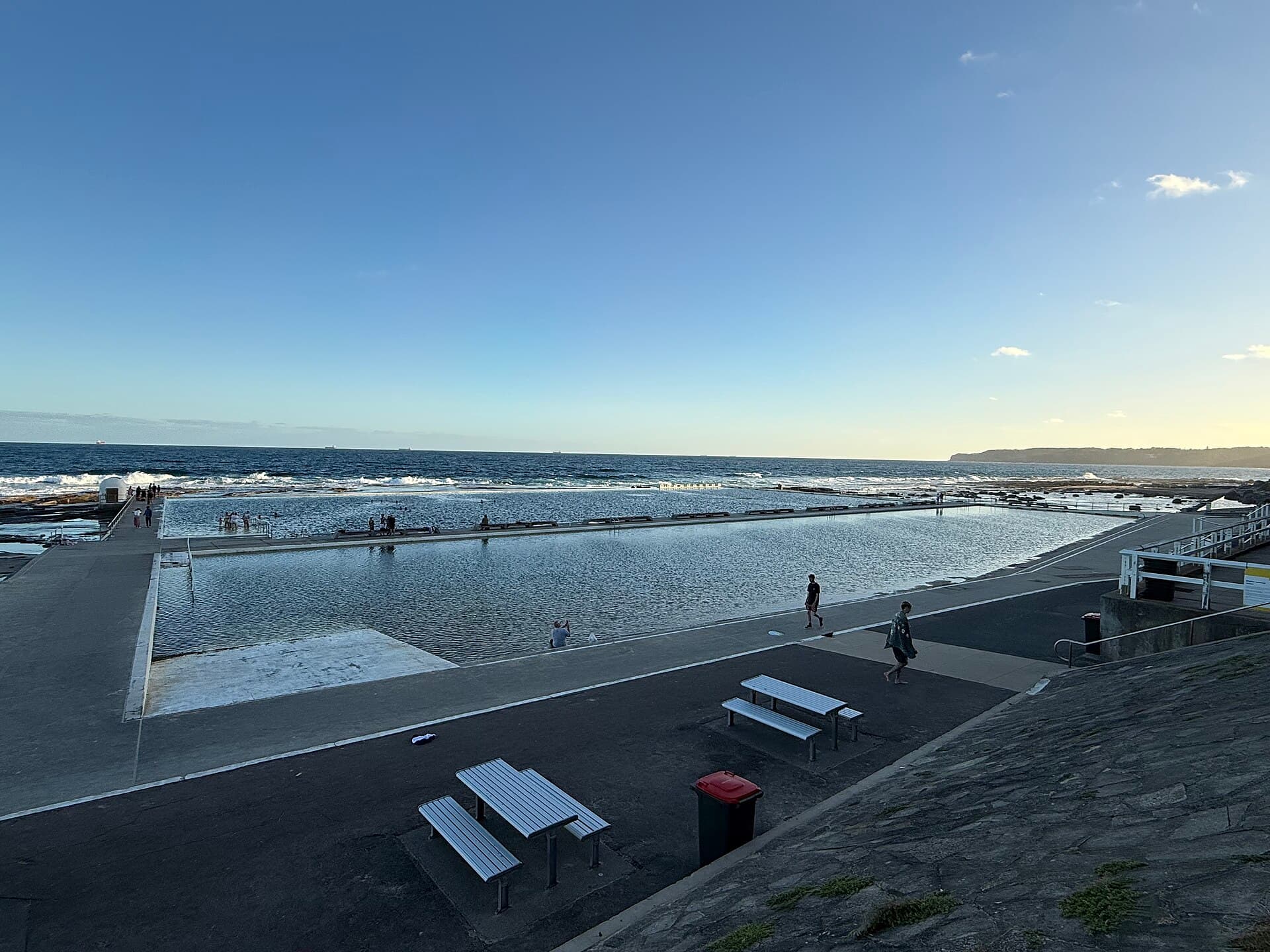
Merewether Ocean Baths are a civic slab that happens to hold the Pacific. They take heat, salt, feet, storms and a summer crowd, and they do it without asking to be marble. That is the useful analogue for a backyard entertaining area in this city. You are not building a showroom.
You are building a working floor that has to survive a January afternoon, a July nor-easter and the mess of people eating outside.
The photograph is not a style to copy. It is a reminder that concrete here is allowed to look like concrete, and that the climate is the other client. This essay sits in decorative and finishes. The slab still needs thickness, joints and a base — keep slabs and foundations in the brief.
An outdoor room, not a leftover pad
The jobs that work start as rooms. A dining pad off a Hamilton kitchen. A Cooks Hill terrace with a table that never folds away. A Merewether deck-substitute for coffee and a late swim crowd. A Lake Macquarie platform that is half entertaining and half lake gear. Name the furniture, the towels, the night path to the bin. Then pour.
A leftover rectangle with a barbecue wheeled onto it ponds at the grill and trips someone at a guessed step. Set the floor relative to the damp-course and the door. A slab that sits high and sheds away from the house is a neighbour. A slab that sits low and drains toward the wall is a dam.
If the entertaining area is also the way to the garage, it is a path and a room. That dual use is where thickness and jointing need a driveway brain. Planning a concrete driveway is not off-topic if cars and guests share a plane.
Falls, pits and the storm that does not book ahead
Water on an entertaining slab is not theoretical. East-coast lows put forty millimetres on a courtyard while the salads are still being dressed. A pretty zero-fall “infinity” pad is a pond. Fall the surface to a pit, to a slot, or to a garden that can take it. Make the pit real: a grate that can be lifted, a trap that can be cleared of jacaranda flowers, a pipe that goes somewhere legal.
A working gradient is something you can feel with a wet marble and that you do not feel as a table-leg limp. Too little and you get a film that turns the stamp or the polish into a rink. Too much and the glasses slide. On a large terrace, more than one pit is not fussiness. It is how you avoid a river toward the one outlet that silted up.
Isolation joints at the house wall keep the entertaining slab from punching the brickwork or tearing the doorway. Control joints belong under the table only if you can live with them there; better to put them on the walking lines and at changes of width. A pit is a re-entrant stress point. Detail it.
On clay, the edge moisture story from reactive ground still applies. Do not build a garden bed that keeps one side of the dining pad permanently wet. The slab will tell you, later, in a crack that runs under the bench.
Shade versus full sun, and Merewether heat
A dark charcoal entertaining slab in full north sun at Merewether in January is a griddle. Bare feet lose. Pets lose. The wine warms. Colour is not only taste. A lighter oxide, a cream polish, a mid sandstone stamp — see coloured concrete — drops the surface temperature enough to change the way the room is used.
Shade is the other half. A sail, a vine, a tree that is not planted against the edge beam, a roof that was always part of the brief. Shade cloth that drips tannin onto a pale slab is a stain story. Metal that drips rust is another. Design the shade as if it will leak, because it will.
The baths stay usable because they are a slab in conversation with water. You cannot put a courtyard in the ocean. You can put a hose tap where you can wash before guests, and choose a texture that is still kind when wet. Glossy sealer on a hot, dusty pad is how someone drops a plate.
A western brick wall radiates after 4pm — pleasant in June, oppressive in February. A west-facing Cooks Hill pocket needs shade low in the sky, not only a midday sail.
Furniture staining, and the marks that become the room
Furniture writes. Black rubber feet leave crescents. Rusting table bases leave commas. Teak bleeds. Planter saucers become brown continents after a wet week. A barbecue that sits in one place for a season leaves a fat shadow no sealer quite forgets.
Practical replies:
- Cups or pads under metal furniture, checked once a season.
- A sacrificial tile or steel plate under the grill, not a prayer.
- Planters on feet, so the slab can dry.
- A sealer you are willing to renew, because an entertaining slab is a spill factory. Sealing is maintenance here, not a one-off ritual.
- A colour that already has movement — a stamp, a stain, a salt-and-pepper polish — if the household is not willing to live with every mark on a cream field.
Oil from food is different from oil from a car, but it still wants a prompt clean. Acid from tomatoes and wine will etch a raw or weakly sealed surface. That etch can be charming on a working floor and tragic on a high-gloss cream pour you treated like a gallery.
Pizza ovens, fire and the small building in the corner
The pizza oven is the object that turns a courtyard brief into a structural one. It is heavy. It is hot. It wants a flue, a landing for the peel, a place for the wood, and a slab that will not stain black in a fan from the mouth. It also wants to be legal: setbacks, smoke, a neighbour in a terrace street.
Give the oven its own pad or a designed plinth, isolated from the dining slab, with a thickness and a mesh that match the weight. A 100 mm courtyard pour is not a foundation. Heat will find a cold joint and open it. Ash and oil will find a porous finish and keep it. A dark, heat-tolerant zone — a steel sheet, a darker oxide bay, a paver insert that can be replaced — is manners.
The same thinking applies to a fire bowl, a kamado, a smoker that lives outside for a summer. Isolate the heat. Assume a spill. Do not put the fire on the walking line to the back gate.
Gas connections and services under an entertaining slab need the same coordination as a waffle-pod kitchen. Know where they run before anyone cores a hole for an umbrella. The umbrella hole, while we are here, is a joint waiting to happen unless it is a designed ferrule.
The baths as a lesson, not a style
Merewether Baths work because they are a concrete project that accepted water, salt and feet as the brief. The surface is not precious. The edges are thick. The falls are toward the thing the structure is for. When the civic concrete chips, it is repaired as concrete, not as a pretend stone.
A domestic entertaining area that takes the same attitude lasts. Specify a slab that is thick enough for the worst party, jointed where it will crack anyway, fallen to a pit you can clean, coloured or stamped in a way you can repair, sealed with a product you will actually renew. Stamped courtyards and polished interiors are finish choices on top of that attitude. They are not a substitute for it.
Curing still belongs on the day. A new entertaining slab left open to a January wind so the owners can “see it” on Saturday is how you buy a dusty skin that will stain under the first lunch. Cover it. The party can wait a week. Curing in this climate is not only a house-slab problem.
Coastal entertaining areas take salt on the wind as well as on the towels. Rinse is a habit. A hose at the end of a beach day does more for a courtyard than a premium sealer bought once. Pair this with the salt-air essay if the lot faces the water.
A brief you can hand to a concreter
Write it before the quote
Write it down before the quote.
- What the room is for, including the oven, the grill, the table size, the night path.
- Where the water goes, with a pit or an edge named.
- How the slab meets the house, and who owns the threshold.
- Colour and finish, with a sample in the actual sun.
- Shade, as a structure, not as a hope.
- A joint plan that does not run through the dining field if you can help it.
- A curing and sealing line, with a first recoat date.
An entertaining slab is the most inspected concrete most households will ever own. It is also the one that has to be kind to bare feet at 2pm in Merewether. Build it as a room that knows the weather. The baths, down the hill, have been running that experiment in public for a century. Your courtyard only has to get it right once, and then look after the film.